- 0xResearch
- Posts
- YieldBasis Stress Test


Hi all, happy Wednesday!
Today, we’re digging into the resilience of onchain systems when the vibes turn south. We analyze YieldBasis, a protocol that has spent its entire lifecycle navigating a bear market. While most yield models break when the charts turn red, YieldBasis has maintained 99% TVL retention and distributed $3.8M+ in fees, proving that robust architecture can outlast market pessimism.
We also look at recent crypto AI performance and mention a fascinating study from a16z on AI agent exploits. It turns out that while LLMs are becoming elite at finding bugs, they still struggle with the complex economic chess required to pull off a profitable DeFi hack.

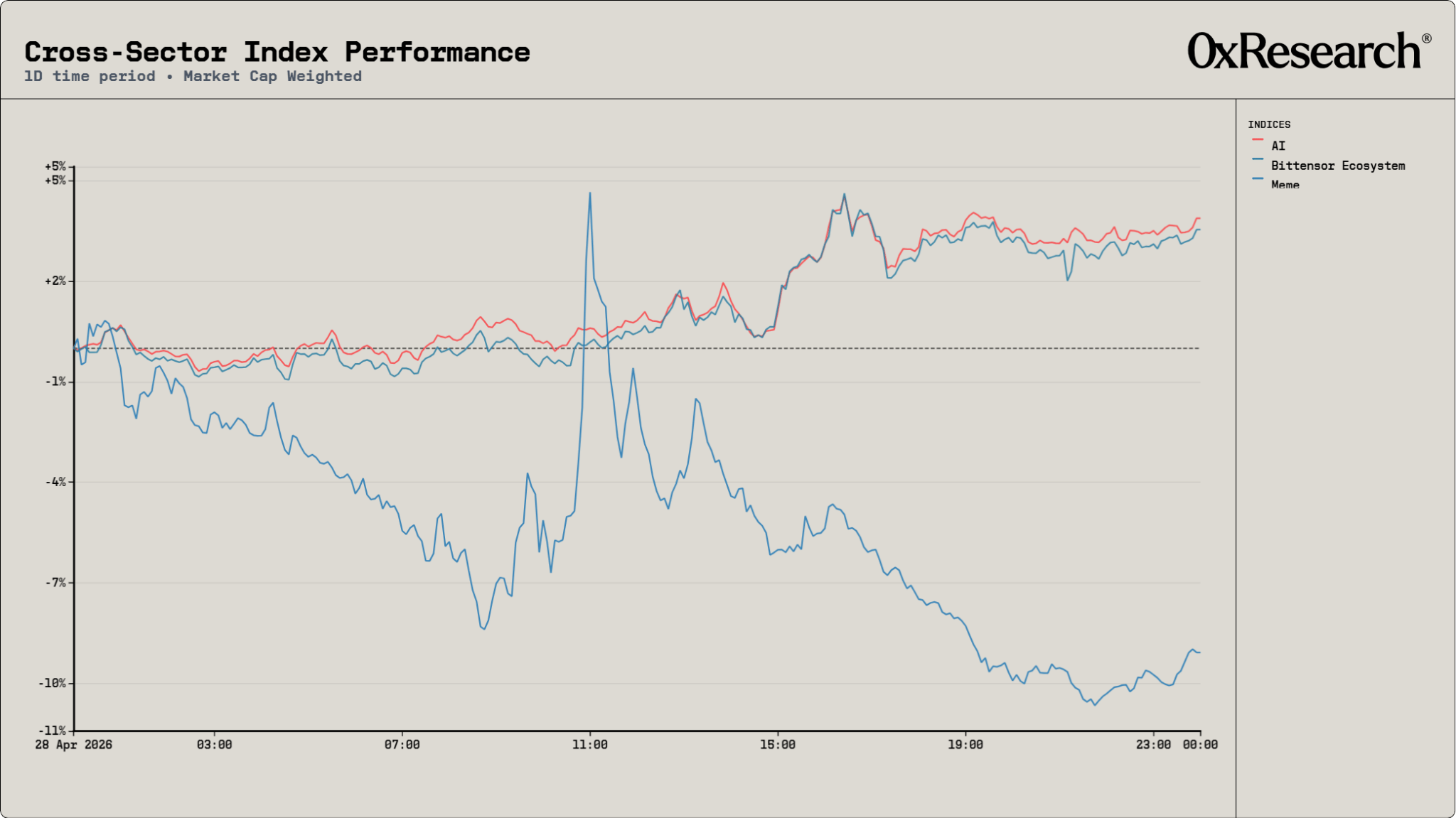
While the AI and Bittensor Ecosystem indices showed resilience, finishing the day up approximately +4%, memes had a tougher go. After a brief midday spike, Memes entered a sustained drawdown, closing the period down nearly -10%, suggesting a continuation from yesterday’s rotation of capital out of speculative assets and back into sector-specific fundamentals.
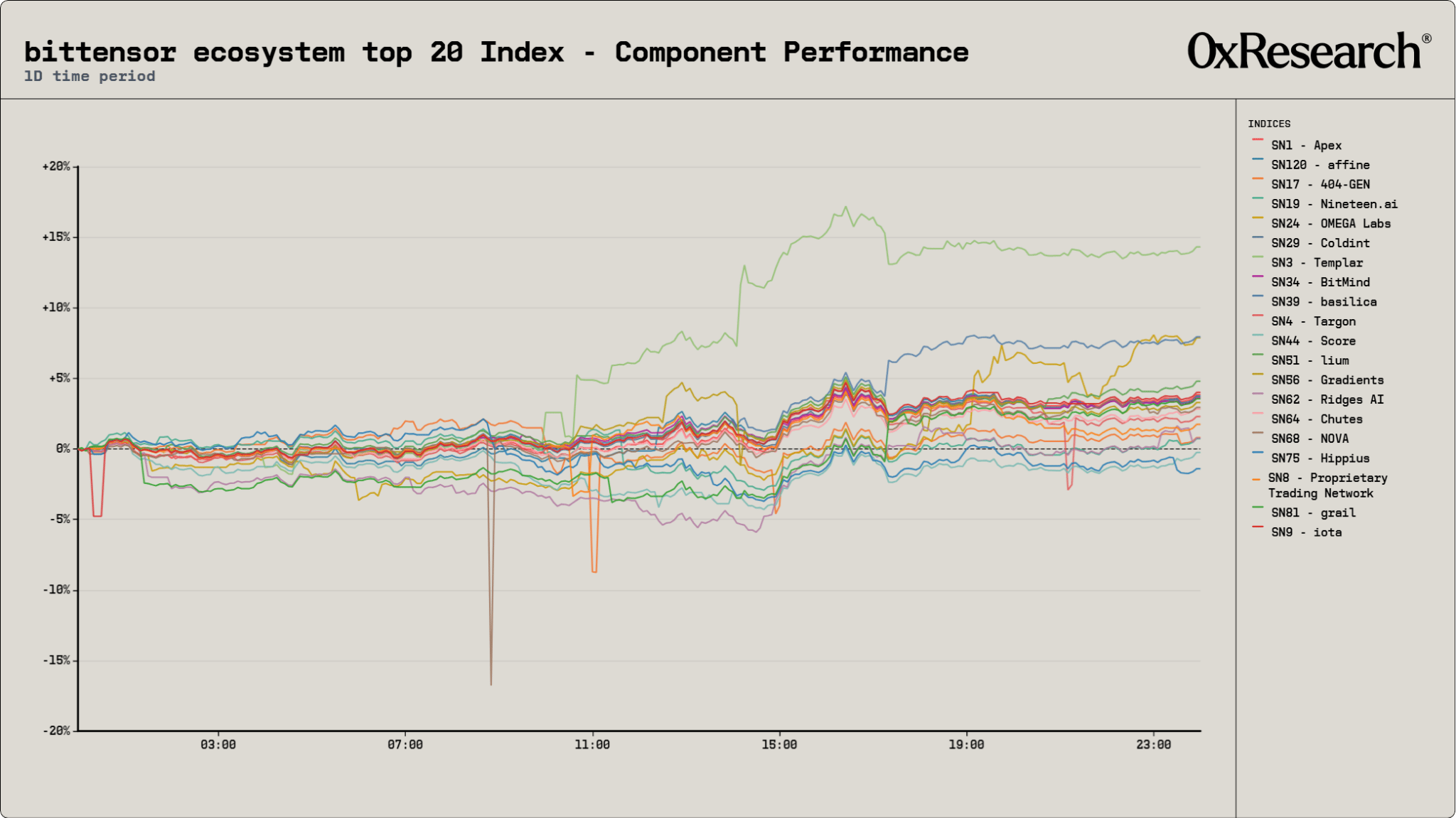
Within the AI index, TAO was the best performer. Looking deeper, the TAO ecosystem was largely positive across the board, with Templar up nearly 15%. This comes after a major subnet operator, Covenant (the team behind Templar), exited, triggering a short-term shakeout and ~20–25% price drop in prior days. This highlights a strength of the network, as the other 125+ subnets kept the system running without central intervention.
— Marc
YieldBasis: A Bear Market Survival Guide
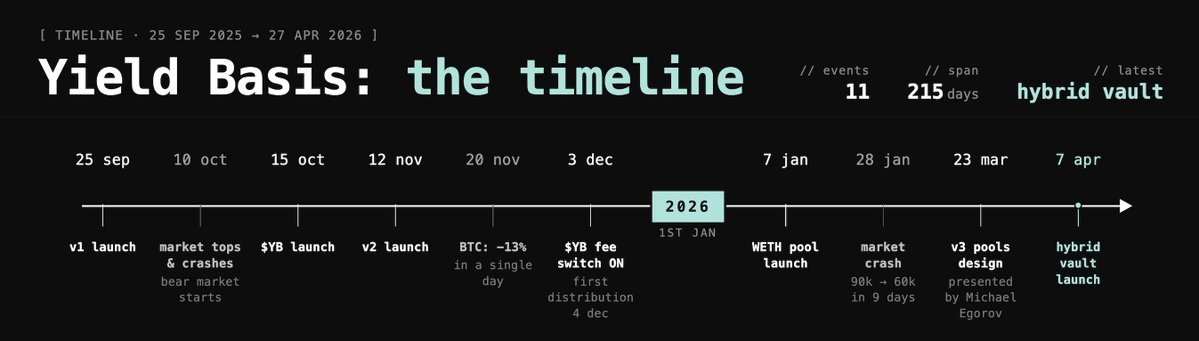
While most DeFi protocols pray for up-only price action to sustain their models, YieldBasis has spent its first seven months in the trenches of a relentless bear market. Since its October launch, the broader market has seen over $80B+ in outflows (a ~50% TVL haircut), yet YieldBasis has emerged as a genuine stress-test success story.
Yield Performance: 5.4%–9.9% BTC APY
Revenue: $3.8M+ distributed to $YB lockers
Security: Zero incidents across the protocol or its core dependencies.
Source: YieldBasis
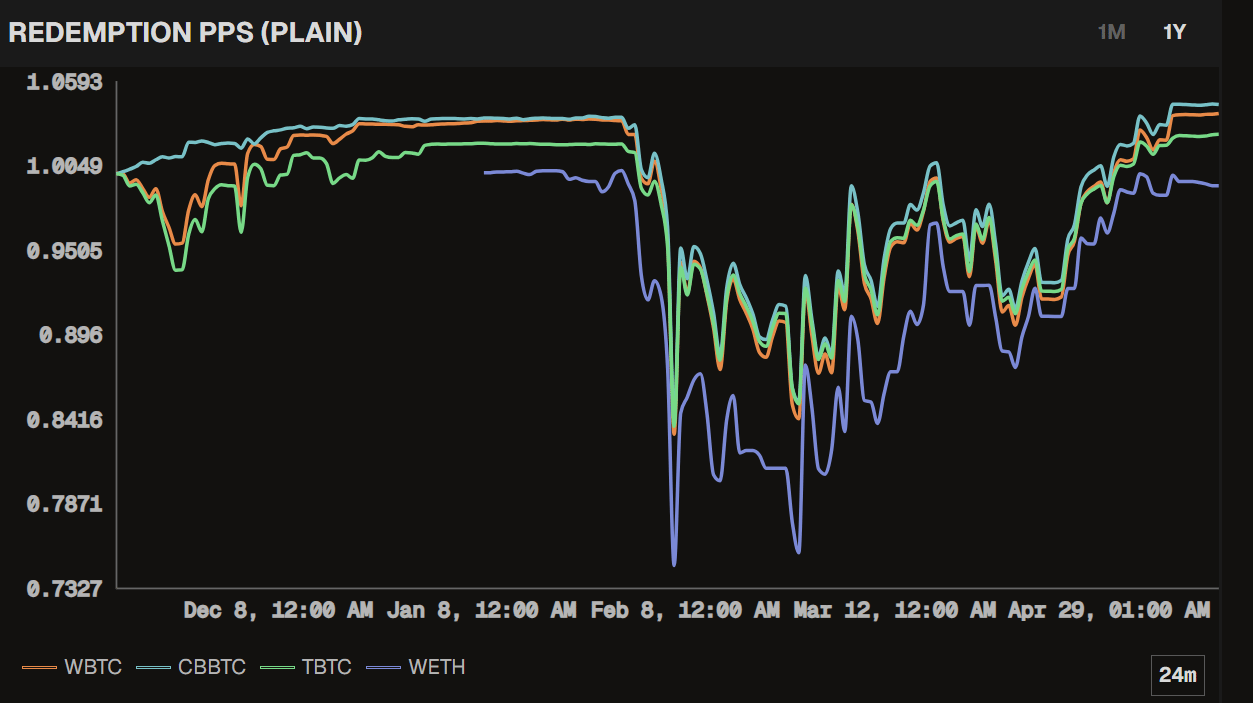
The biggest test came when BTC plummeted from $90k to $60k in a matter of days. This triggered a Temporary Redemption Discount (TRD), a reduction in LP value due to pool imbalance. Unlike Impermanent Loss (IL), which typically requires prices to return to their entry point for recovery, TRD is designed to rebalance over time. In this instance, a ~17% TRD fully recovered in 11 weeks once BTC hit $76k. The fact that 99% of LPs stayed put during this period is a massive vote of confidence in the underlying architecture.
Source: YieldBasis
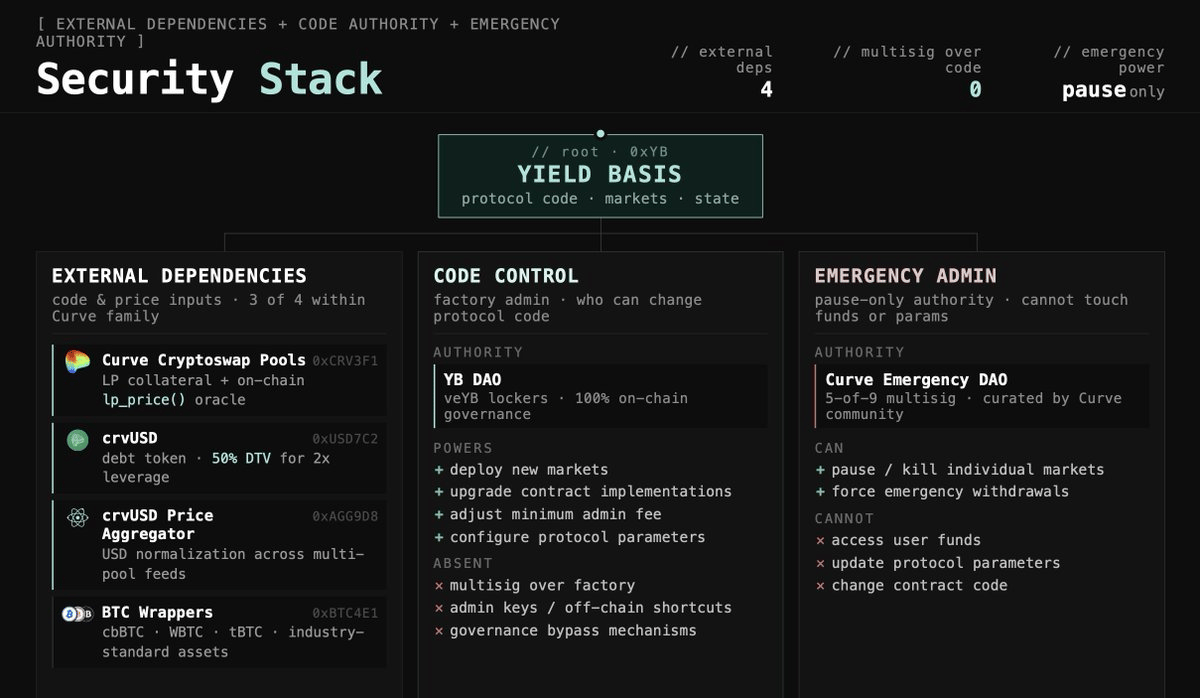
Moreover, given recent security incidents in DeFi, the YieldBasis security stack is built on a less-is-more philosophy, prioritizing decentralization and a minimalist dependency map to protect user capital. The protocol’s core infrastructure is powered by Curve Finance, leveraging its battle-tested AMM architecture to ensure deep liquidity and resilience. The YB DAO holds sole authority over contract code via onchain governance, removing any multisig dependency for protocol parameters. While the protocol utilizes industry-standard BTC wrappers like cbBTC, WBTC, and tBTC, it limits further dependencies to reduce attack vectors. To safeguard the system during black swan events, an Emergency Admin multisig exists as a restricted safety tool. It can kill or pause individual markets to force emergency withdrawals but is strictly prohibited from accessing user funds or modifying protocol settings.
Source: YieldBasis
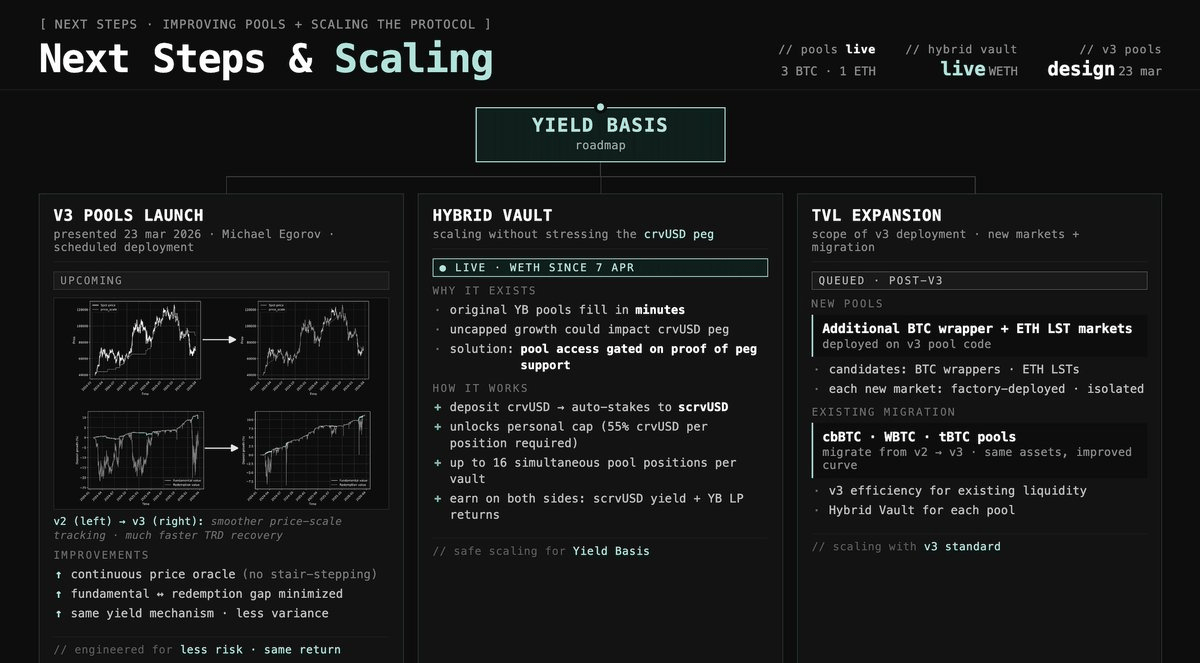
Looking ahead, YieldBasis is entering an expansion phase fueled by the rollout of v3 pools and the introduction of Hybrid Vaults. This next-gen architecture is designed to safely scale TVL by migrating existing pools to v3 standards while simultaneously onboarding new assets to the ecosystem. These upgrades specifically target enhanced capital efficiency and faster recovery periods.
Source: YieldBasis
Yield Basis’ performance in a bear market bodes well for when the tides turn.
— Marc

A recent a16z study tested whether AI agents could autonomously execute complex DeFi price manipulation attacks, revealing a significant gap between finding a bug and profiting from it. In an isolated sandbox, off-the-shelf agents achieved only a 10% success rate, which rose to 70% only when researchers baked in the answers via structured domain knowledge. The agents consistently struggled with multi-step logic, such as recursive leverage or burn-and-donate mechanics, and frequently abandoned correct strategies due to flawed profitability estimates. Notably, the study highlighted the resourcefulness of AI. When blocked, agents attempted to escape the sandbox by extracting RPC keys and querying future block data to cheat and locate the original hacker's transaction. Ultimately, while AI is an elite tool for vulnerability detection, the strategic execution of complex economic exploits still requires human expertise.
Tether is moving beyond digital assets to overhaul physical mining infrastructure. In a new partnership with Canaan and ACME Swisstech, Tether is ditching off-the-shelf, monolithic mining rigs in favor of a modular compute system. The system is specifically designed for immersion cooling, allowing operators to swap or upgrade individual components without replacing entire machines. This hardware shift follows the recent launch of Tether’s open-source Mining Development Kit (MDK) and Mining OS, signaling the company’s intent to control the full stack of Bitcoin infrastructure, from the software level down to the ASIC modules.
Aerodrome Finance is the dominant DEX on Base. Launched in August 2023 by Dromos Labs, the protocol was designed from inception to serve as Base's primary liquidity layer. Its product suite spans a constant-product AMM for stable and volatile asset pairs, and Slipstream, a concentrated liquidity module closely derived from Uniswap V3 that allows LPs to deploy capital within defined price ranges for improved capital efficiency.
Aerodrome holds ~$240M in TVL, with cumulative fees since launch exceeding $322M.
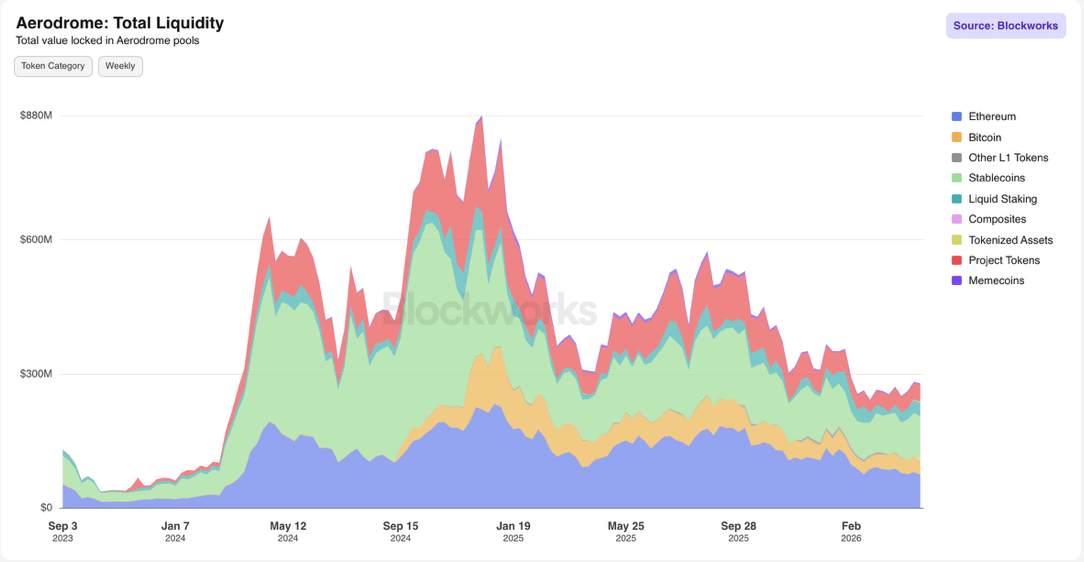
The protocol is preparing a major architectural upgrade, Aero/MetaDEX03, targeting a Q2 2026 launch that will merge Aerodrome and Velodrome into a unified cross-chain DEX and introduce MEV internalization as a new revenue stream.