- 0xResearch
- Posts
- SLX delays launch, Clarity votes
SLX delays launch, Clarity votes
The vote that sets crypto's regulatory clock

Nick Carpinito
May 14, 2026

GM and happy Thursday!
Today we're watching the Senate Banking Committee's 10:30 AM ET markup of the CLARITY Act, the vote that determines whether crypto's federal regulatory framework moves forward or stalls heading into Memorial Day recess.
Then we look at Solstice Finance, the Solana-native yield protocol bringing institutional-grade delta-neutral returns onchain, and its upcoming governance token SLX.

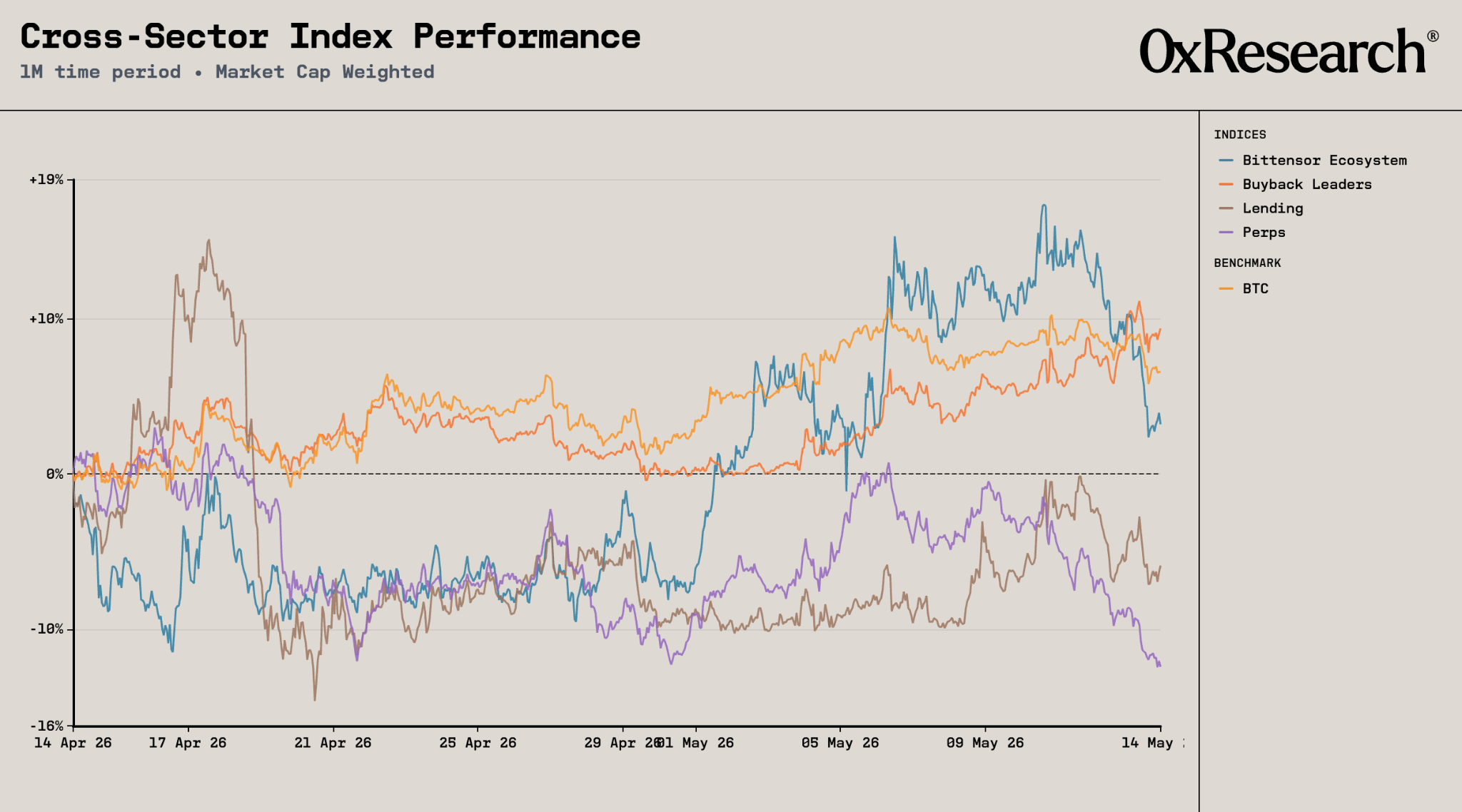
BTC is trading around $79,278, down ~1.5% from yesterday's close of $80,481. ETH slipped 0.75% to $2,258, while SOL fell 3.4% to $91.07. On a 1-month basis, Buyback Leaders is the standout sector, surging to ~+62% into today's session to take the top spot on the leaderboard. Lending and the Bittensor Ecosystem have both trudged up ~+35% over the same window, with Bittensor having peaked above 60% in late April before pulling back. Perps sits at the bottom of the board, down ~15-19% on the month. On the ETF side, global BTC products saw $26.9M in net inflows on Tuesday, while ETH products shed $8.3M.
The session's main event happens at 10:30 AM ET today, when the Senate Banking Committee convenes a markup hearing for the Digital Asset Market CLARITY Act, the crypto market structure bill that would create a federal regulatory framework for digital assets, splitting jurisdiction between the SEC for token offerings and the CFTC for spot trading and digital commodities.
The committee composition is 13 Republicans to 11 Democrats, meaning all Republican votes are needed to advance the bill. Senator John Kennedy remains uncommitted going into the session, though his hesitation is reportedly unrelated to the bill's crypto provisions. Chairman Tim Scott has described the current moment as "the red zone." Senator Cynthia Lummis has warned that a miss before the May 21 Memorial Day recess could effectively push the bill to 2030.
Over 100 amendments were filed ahead of today's session, the majority from Democrats. Senator Warren alone submitted more than 40, including a proposal to bar the Federal Reserve from granting master accounts to crypto firms, which would cut off direct access to Fedwire and ACH settlement rails. Most Democratic amendments are not expected to survive a simple majority vote given the committee's composition.
Three outcomes are in play: a clean committee pass with one or two Democratic crossovers (which keeps the White House's July 4 signing target alive), a strict 13-11 party-line pass (which signals difficulty reaching the 60 Senate floor votes needed, in case of a Democratic filibuster), or a stall if Kennedy defects or the amendment volume delays a completed vote past the recess window. Polymarket currently prices 2026 passage at 62%.
Even in a best-case scenario today, the bill still needs to be reconciled with a separate version passed by the Senate Agriculture Committee, and the conflict-of-interest provision, specifically whether the bill would apply restrictions to the president's own crypto holdings, remains unresolved heading into the floor process.
— Nick
Solana’s Native Yield Layer
Solana has been one of the fastest-growing stablecoin settlement chains over the past 18 months, but the yield largely wasn't staying onchain. USDC holders looking for real returns were bridging out, farming elsewhere, and bringing proceeds back. Solstice was built around that observation.
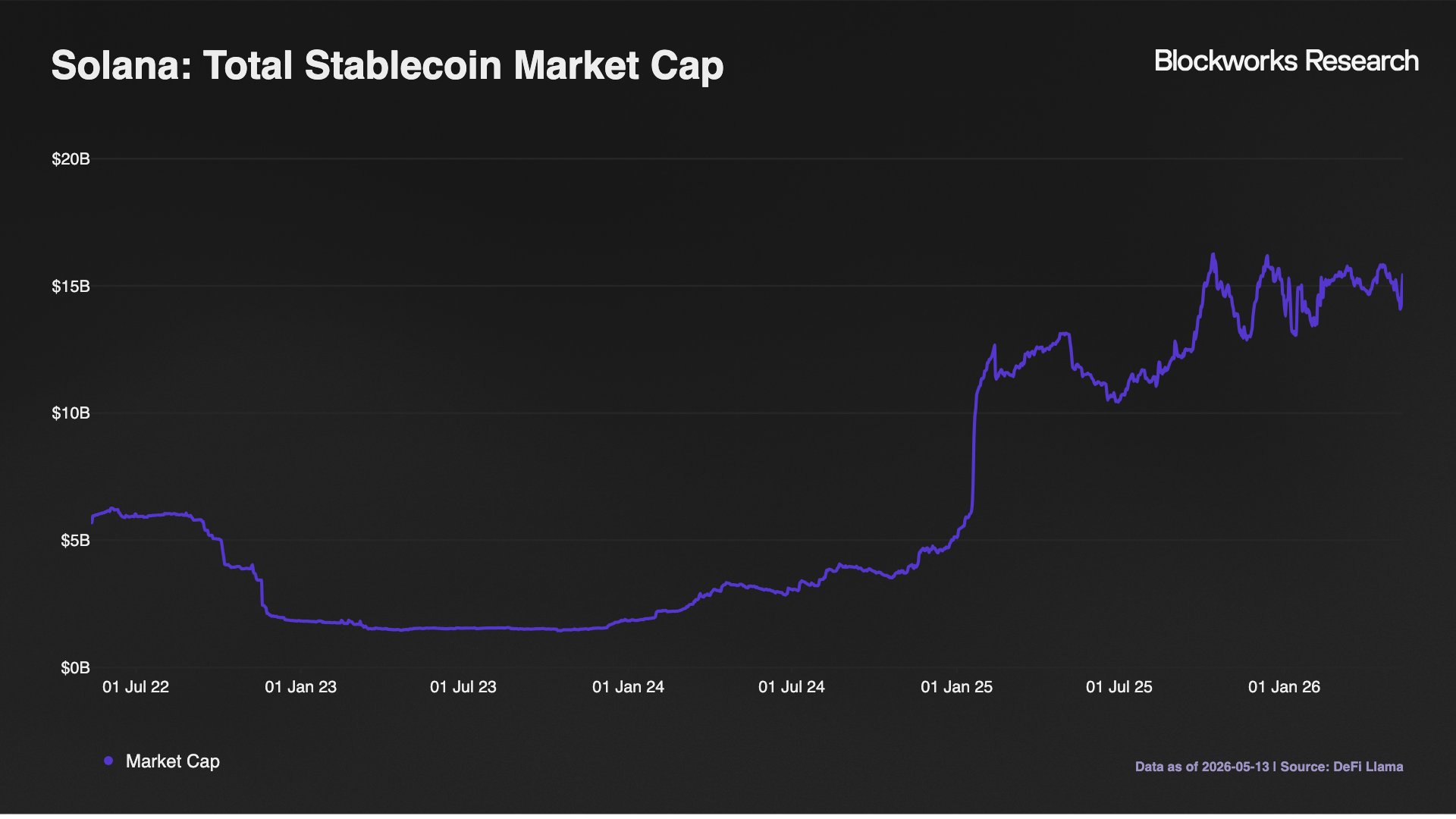
The protocol launched Sept. 30, 2025, with two products. USX is a fully collateralized stablecoin backed 1:1 by USDC and USDT, with real-time Chainlink proof of reserves. YieldVault is the yield engine: users stake USX, receive eUSX, and earn from a delta-neutral strategy that combines funding rate arbitrage, hedged staking, and tokenized T-bill allocations. The strategy posted 21.5% returns in 2024, a 14.0% net IRR across three years, and has not recorded a negative month since inception. That track record originates from Deus X Capital, the $1B AUM firm that backs the protocol and ran the strategy in traditional markets before Solstice brought it onchain.
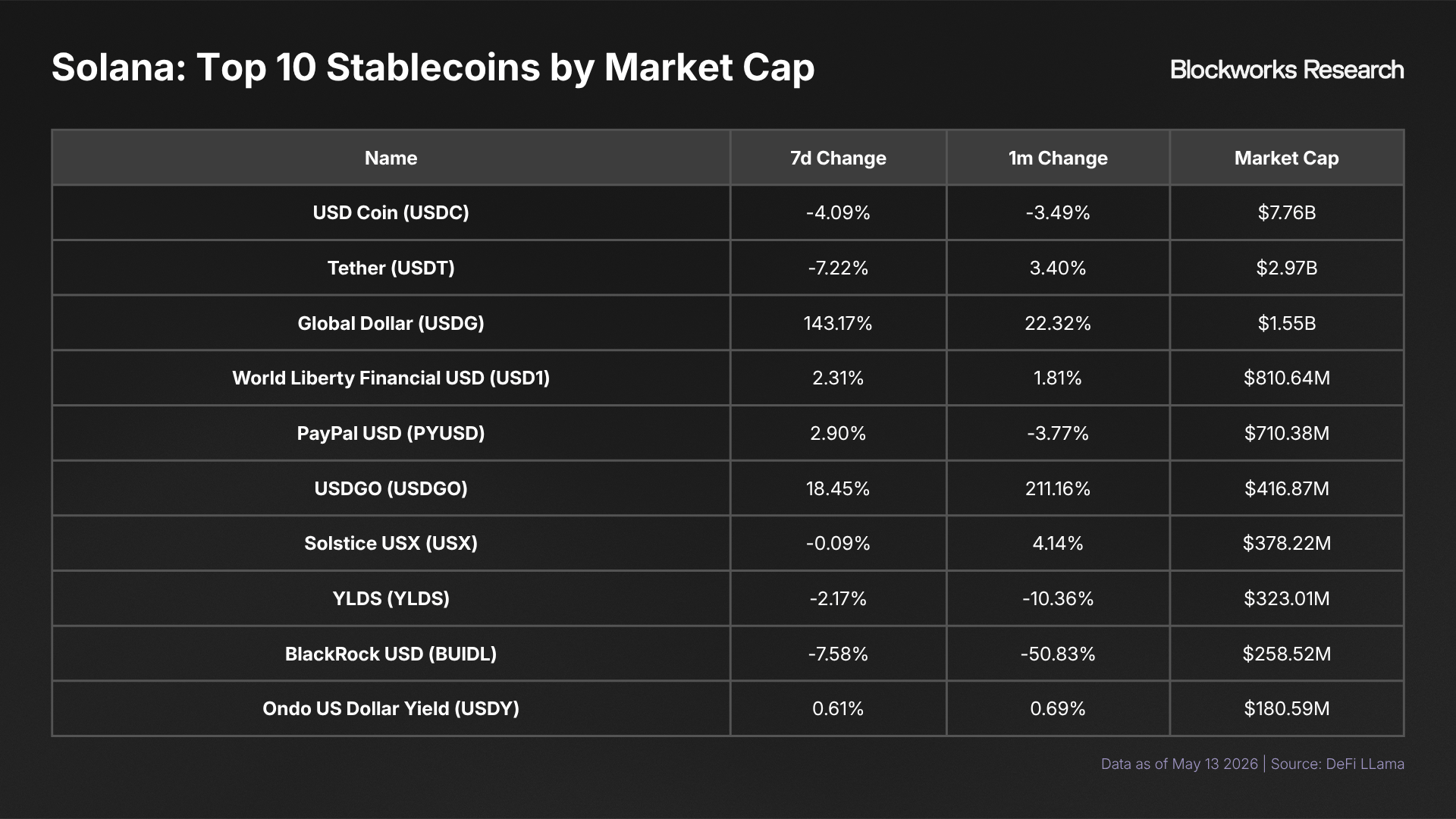
Solstice went live with $160M in TVL, backed by Galaxy Digital, MEV Capital, Bitcoin Suisse, and Auros. TVL has grown to ~$378M today. In January 2026, DeFi Development Corp. (Nasdaq: DFDV) adopted YieldVault for onchain treasury management, becoming the first publicly listed company to do so. USX is now integrated across 50+ Solana ecosystem partners, including Raydium and Kamino Finance.
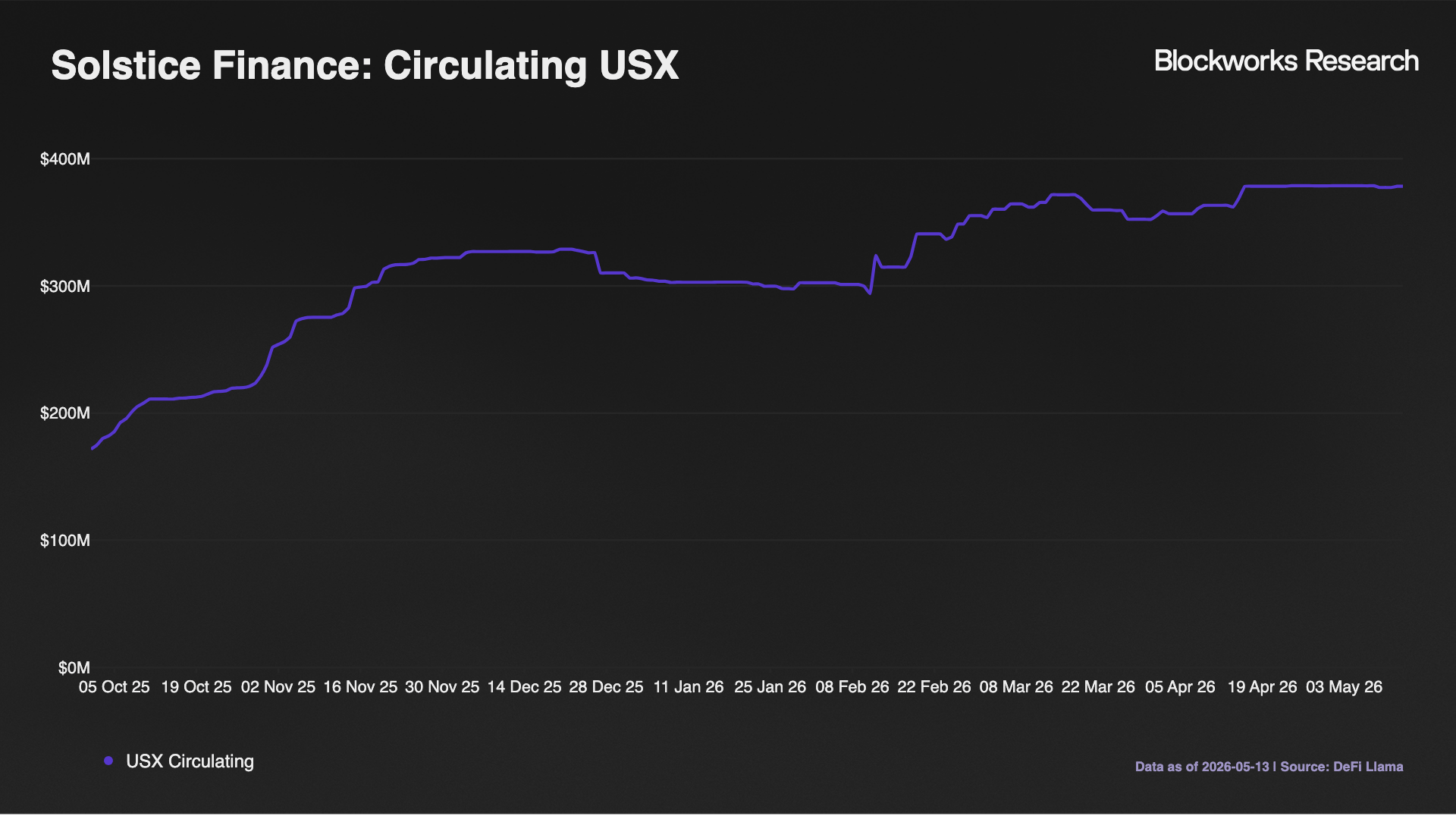
SLX, Solstice's governance and utility token, is now scheduled to launch on May 21, the second pushed date after an original Q1 2026 target. The delay follows a presale that struggled to find demand: the December 2025 Legion sale targeted a $4M raise at a $130M FDV and closed at ~$302K, roughly 7.5% of its target, with $501K in refunds taken against gross deposits. ~20% of the 1B fixed supply will circulate at TGE, with the remainder unlocking over 36 months and a deflationary burn mechanism activating at $1B in total deposits.
How SLX accrues value relative to protocol revenue remains an open question. With the presale underperforming and the token launch twice delayed, whether liquidity incentives can sustain TVL growth from here is the more immediate test.
— Nick


Andrew Kang published an article arguing that experienced investors' pattern-recognition instincts, trained on the dot-com crash, the 2008 GFC, and crypto boom-bust cycles, are actively working against them at the current moment. The central thesis is that proximity to artificial general intelligence renders conventional valuation frameworks obsolete: traditional present-value models cannot price the embedded optionality of a technological transition that could compress more economic growth into the next two decades than the entirety of prior human history. The piece cites Anthropic's disclosure that Claude now writes 100% of its product code as a concrete marker of where capability development currently sits on the curve and argues the rational response is to extend time horizons, abandon market timing, and size exposure to the upside risk rather than the downside.

The podcast covers Marc Andreessen’s views on AI, arguing that fears about job loss and “AI psychosis” are overblown while AI-native workers, “builders,” and young graduates could gain enormous productivity advantages from the technology. It also veers into political and cultural debates, including “suicidal empathy,” alleged NGO abuses, media-driven fear campaigns, generational distrust of authority, and how polling may misrepresent actual AI adoption. The episode closes with speculation on UFO disclosures, advice for students to “gain AI superpowers,” and Andreessen’s media-monitoring habits across X, Substack, YouTube, and older books.
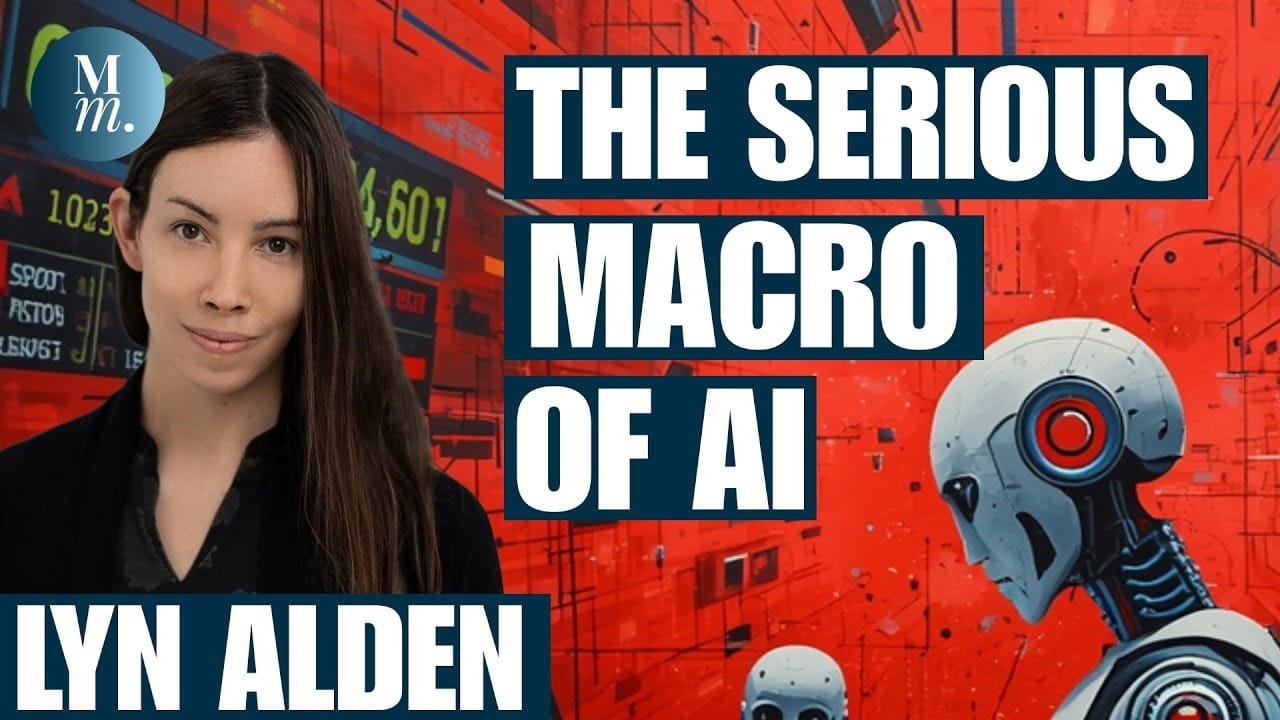
Jack Farley and Max Wiethe interview Lyn Alden about AI’s macroeconomic effects, including rising demand for semiconductors, electricity, memory, and data centers, while AI may pressure some software business models and reshape labor markets. Alden argues the economy is increasingly “K-shaped,” with AI, fiscal deficits, energy shocks, and record-low consumer sentiment coexisting with stocks near all-time highs and strong investment opportunities in areas like Bitcoin, stablecoins, semiconductors, energy, and select value plays. The conversation also explores stablecoins as money for AI agents, the Iran/Strait of Hormuz energy shock, stagflation risks, and Alden’s sci-fi book The Stoleg Guard Incident, which imagines a semi-dystopian 2070s shaped by AI, surveillance, VR escapism, and lower labor-force participation.