- 0xResearch
- Posts
- Payout Pivot


Hi all, happy Wednesday!
Markets pulled back as the US-Iran standoff dragged into another day, and a hotter-than-expected 3.8% inflation print reminded investors that a prolonged conflict has a price tag. Brent pushed back above $107, gilts kept selling off, and the AI trade quietly extended its run through European semis.
Today, we also dig into the two creator payout pilots that nobody covered properly: YouTube on PYUSD, Meta on USDC, and why the second one looks a lot more like infrastructure than experiment.
Global markets pulled back on Tuesday as the US-Iran stalemate dragged on and fresh inflation data spooked investors. The S&P 500 fell 0.28% and the NASDAQ 100 dropped 1.02%, retreating from recent record highs. US inflation jumped to 3.8% annually in April, a three-year high, underlining the war's potential to trigger a broader price shock. Brent crude rose 3.3% to $107.65.
UK bonds continued their selloff, with 30-year gilt yields touching 5.81%, their highest since 1998, as traders bet the Bank of England would need to raise rates. The political backdrop added pressure, with Prime Minister Starmer battling to save his premiership after disastrous local election results and four ministerial resignations. Ten-year gilt yields hit 5.13% intraday. The pound fell 0.6% to $1.352, its worst day since March. Gold slid 1.05%.

The AI trade continued to broaden globally. The top four performers in the Stoxx Europe 600 this year are all tech-adjacent: STMicroelectronics has more than doubled, Aixtron is up 168%, and Nokia has nearly doubled. Barclays' Emmanuel Cau described a "gold rush" as European investors scramble for exposure to a continent with few pure AI plays. The European semiconductor index is up roughly 74% year-to-date versus just 2% for the broad Stoxx 600.
In crypto, institutional access keeps widening. Charles Schwab launched spot BTC and ETH trading for select retail clients this week via its new "Schwab Crypto" platform, opening its $11.77 trillion client asset base to direct crypto exposure. Separately, 21Shares launched the first-ever Hyperliquid ETF (THYP), posting $1.8 million in first-day volume, with Bitwise's competing HYPE fund expected next.
BTC fell 1.53% on the day, and the broader crypto market was largely red. Only Crypto Miners (+1.6%), Modular (+1.5%), and Privacy Index (+0.7%) finished positive. The rest was a sea of selling: the 2025 Crypto Equity Cohort reversed course, down 8.1%, Ethereum Eco dropped 4.4%, DeFi and Perps both fell 4.4%, and AI tokens lost 3.5%. L1, Launchpad, DePIN, and Revenue Leaders all declined between 2.5% and 2.7%. The pullback follows a strong monthly run and likely reflects profit-taking after the sharp rally across most sectors.

Big Tech’s stablecoins are first for creators
The two largest content platforms in the world are looking to pay creators in digital dollars. YouTube quietly rolled out PYUSD payouts to US creators in December. Meta followed in April, routing USDC to creators in Colombia and the Philippines via Stripe, on Solana and Polygon rails. Neither announcement came with much fanfare. Both matter more than the coverage suggested.

For creators, the pitch is simple. Faster settlement, fewer intermediaries, and dollar-denominated earnings that don't get eaten up by correspondent banking fees on the way out. This is especially important for a Facebook creator in Medellín earning ad revenue in USD, who has historically faced a painful conversion process, wire transfer delays, FX spreads, and bank fees compounding at each step. Stablecoins smooth this process. USDC lands in a self-custodied wallet in seconds, at a fraction of the cost. Meta's $3 billion in creator payouts last year gives a sense of the aggregate friction that can be removed.
The design of each rollout is telling. YouTube stays entirely in fiat, it sends dollars to PayPal, PayPal converts to PYUSD and credits the creator's account. YouTube never touches crypto. Meta goes a step further. Creators connect a third-party wallet directly to the payout platform and receive USDC onchain. No off-ramp provided. This means Meta is routing real onchain volume, not just a stablecoin-flavored PayPal balance, and it's doing so on two of the cheapest, fastest settlement networks available.
For those who remember, Meta spent years building Libra (later Diem) before regulators killed it in 2022. Meta said in February it had no plans to build its own, but the business case for a Meta stablecoin has only gotten stronger. The company has 3+ billion monthly active users across Facebook, Instagram, and WhatsApp. It already runs one of the largest creator payout operations in the world. A proprietary stablecoin (or partnership) would let Meta capture interchange economics it's currently ceding to Circle and Stripe, build a native payments layer across its messaging stack, and create a closed-loop economy where ad dollars, creator payouts, and peer-to-peer transfers all move through Meta-issued digital dollars. WhatsApp alone, with its dominant position in markets like Brazil, India, and Nigeria, is a distribution channel for a stablecoin that most issuers would spend a decade trying to replicate.
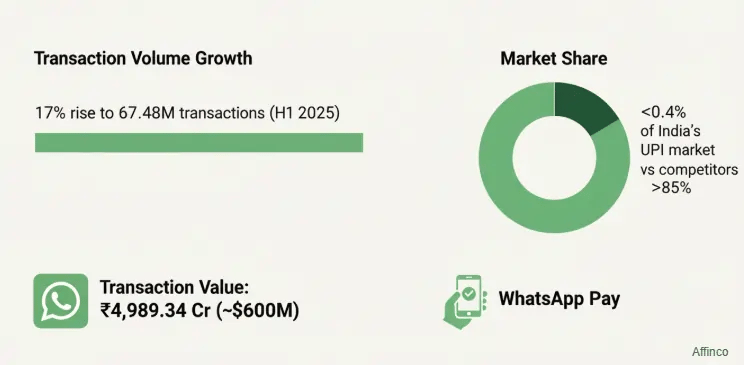
The pilot in Colombia and the Philippines looks less like an experiment and more like infrastructure building. Meta is learning the compliance, wallet integration, and FX dynamics of stablecoin payouts in exactly the emerging markets where the product has the most disruptive potential and where a Meta-issued stablecoin would face the least entrenched competition from traditional finance.
YouTube's play is narrower. PYUSD has a $4 billion market cap and limited distribution outside of PayPal's ecosystem. YouTube is a distribution channel for PayPal's stablecoin ambitions, not the other way around. Meta, by contrast, may be building toward something where it controls the full stack (or benefits from the economics).
The creator payout use case is the wedge. Once a creator normalizes receiving earnings in a digital dollar and holding it in a wallet, the next products — spending it on ads, sending it to a collaborator, earning yield on idle balances — sell themselves. Big Tech's stablecoin moment started with a payout toggle. It won't end there.
— Marc


Circle’s ARC whitepaper presents Arc as a public L1 designed to be the internet’s “Economic OS”: a shared financial platform where stablecoins, tokenized assets, payments, lending, and markets run on one composable stack with deterministic settlement, configurable privacy, and stablecoin-native fees. ARC is framed as the network’s native coordination asset, tying together five functions: staking/economic alignment, governance, fee capture, platform utility, and an expanding utility surface across Circle and partner products.
The paper emphasizes a gradual transition from a permissioned validator set under Circle’s stewardship toward a PoS model with tokenholder governance over economic parameters, while keeping some operational and compliance decisions centralized at first. Economically, ARC starts with a 10B token supply, a decaying inflation model, protocol-level conversion of fees into ARC for distribution plus burn, and an initial allocation of 60% ecosystem, 25% Circle, 15% long-term reserve. The broader thesis is that blockchains, stablecoins, and regulatory progress have finally aligned to make a shared economic operating system viable, and Arc is Circle’s attempt to become that foundational coordination layer.
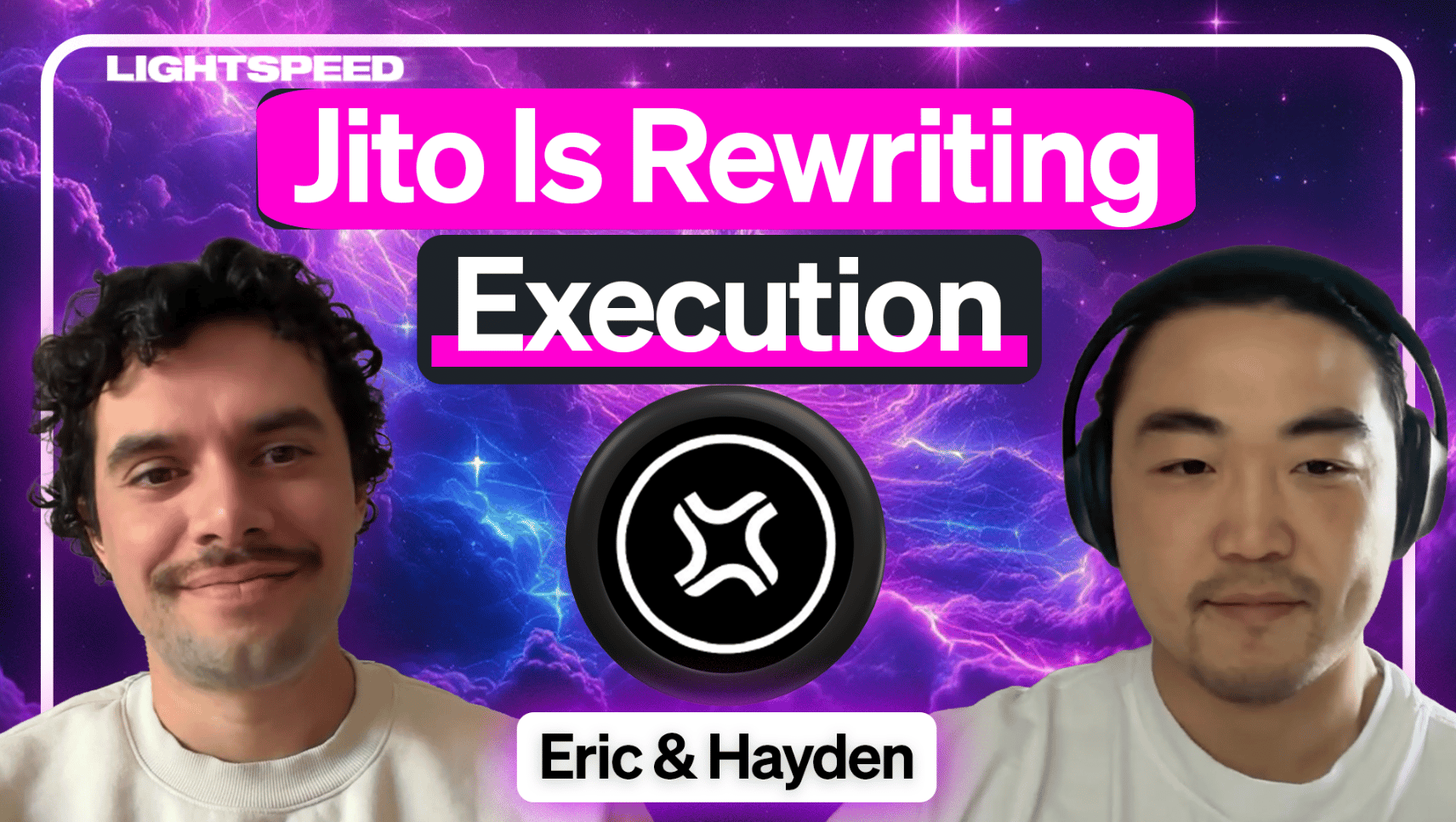
Eric and Hayden from Jito join Lightspeed to discuss Solana Accelerate, the launch of Jito’s Maker Prioritization Plugin, and broader efforts to improve Solana’s market structure through more deterministic transaction scheduling. The discussion also covers validator incentives, BAM architecture, plugin experimentation, perpetuals and prediction markets, tokenized assets, and why user experience and distribution will be critical for driving onchain trading adoption.