- 0xResearch
- Posts
- Lending tokens rally



Hi all, happy Wednesday!
Today we unpack why lending tokens are leading the board, even as daily revenue sits at a fraction of its peak.
BTC posted a solid day, but net outflows are back after a nine-day inflow streak. Then, we look at how OnRe and Re Protocol are putting $300 million in real reinsurance capital onchain and why that matters for DeFi collateral.

BTC finished the day as one of the stronger large-cap exposures (+2.1%), behind higher-beta crypto themes like Lending (+4.6%) and the Ethereum Ecosystem (+4.4%). Major US equity benchmarks were also positive despite the wider geopolitical environment.

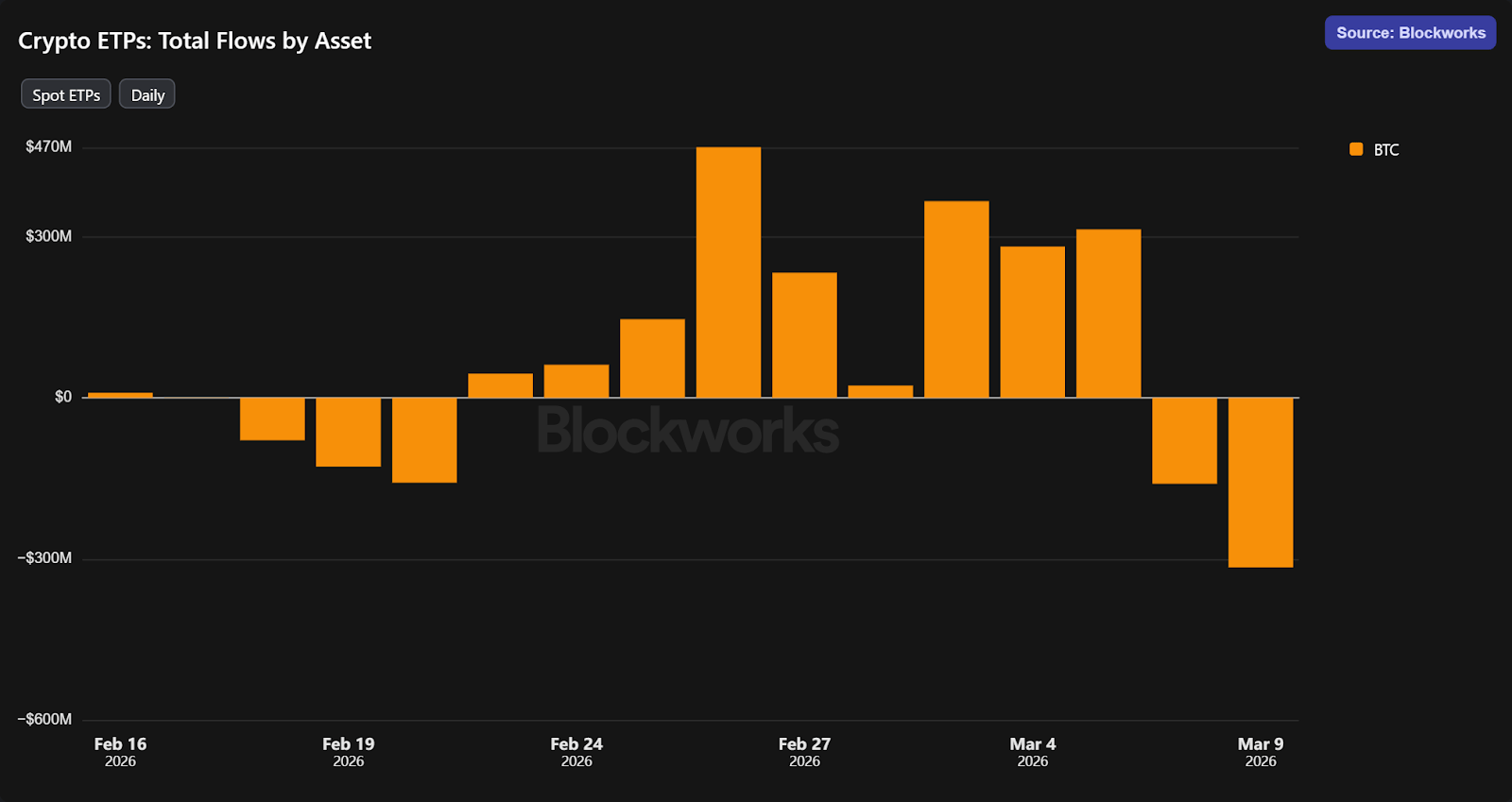
However, BTC’s positioning doesn’t look solid, as net outflows have resumed over the past two days after nine consecutive days of positive inflows consisting of roughly $2 billion.
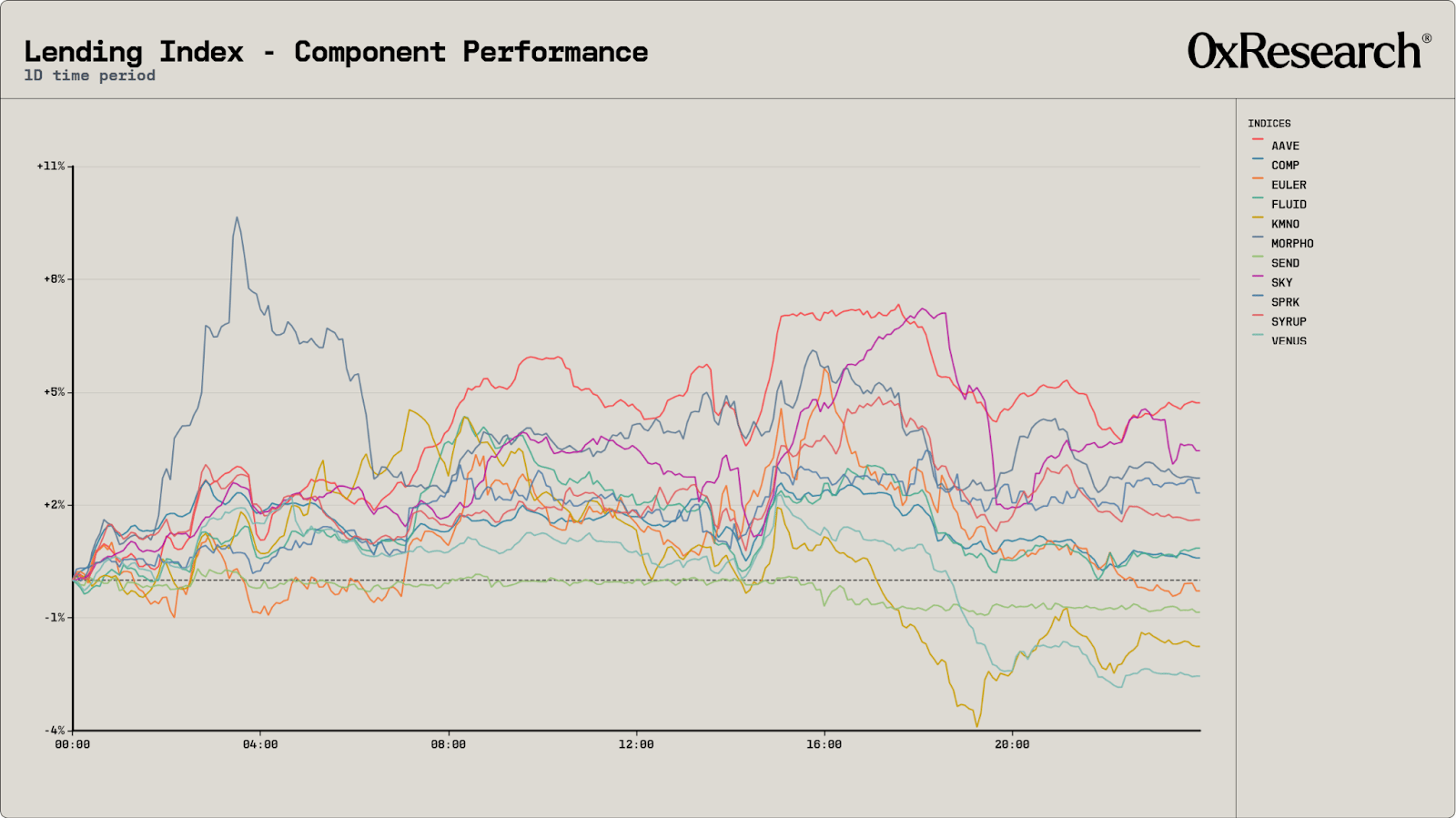
As for the lending sector, performance was broadly positive as the largest platforms — Aave (4.7%), SKY (3.4%) and Morpho (2.7%) — led the returns profile among their peers.
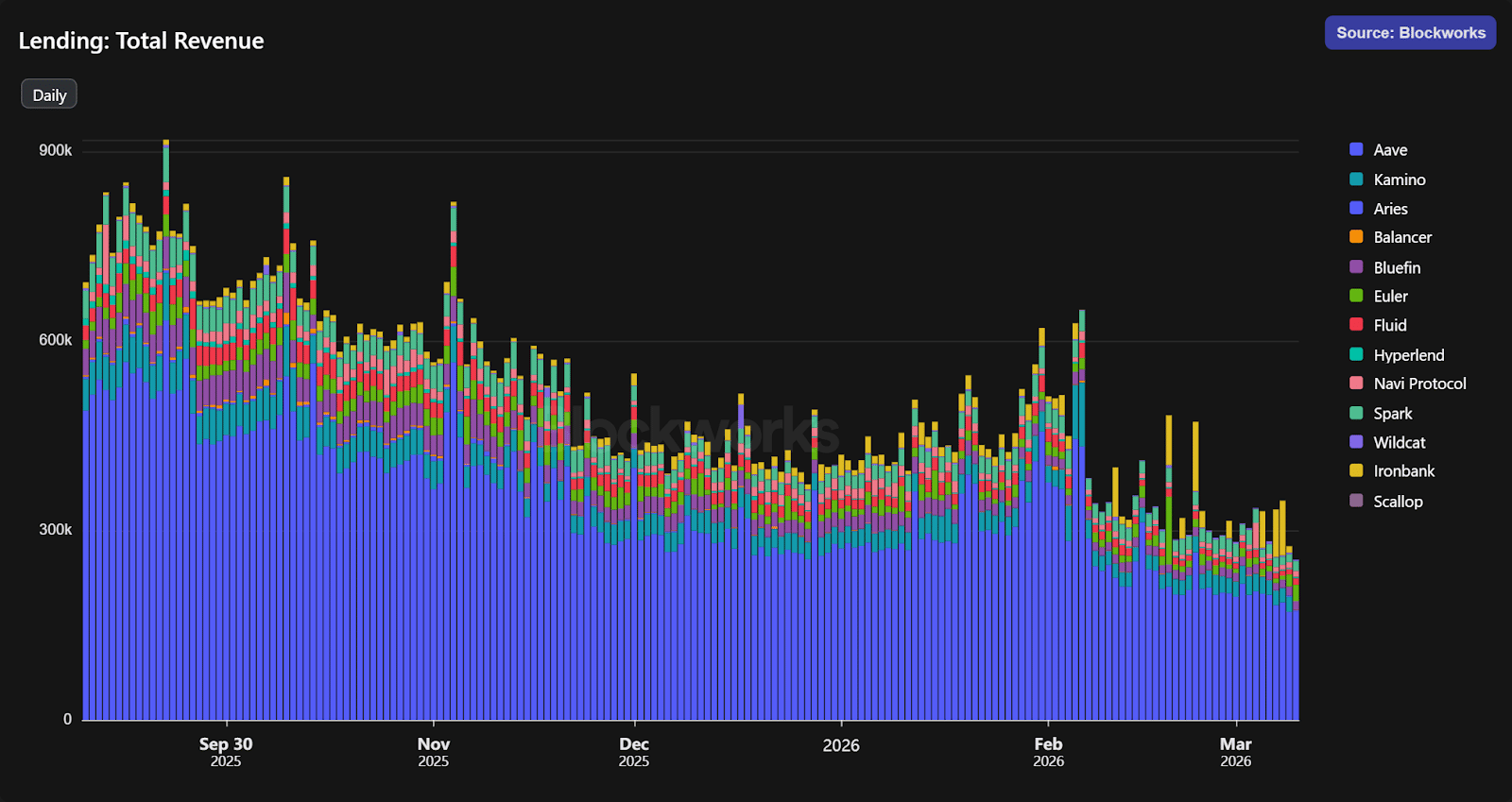
Lending protocols’ recent outperformance comes despite the sector’s broader downward revenue trend. Daily revenue for onchain lenders peaked at ~$850K in September 2025 and has since fallen to roughly $250K per day (−70%).
Simultaneously, valuations for the revenue generators have also fallen roughly 70% (in line with their fundamentals).

Some of the smaller lending platforms with more stretched valuations have declined even more.
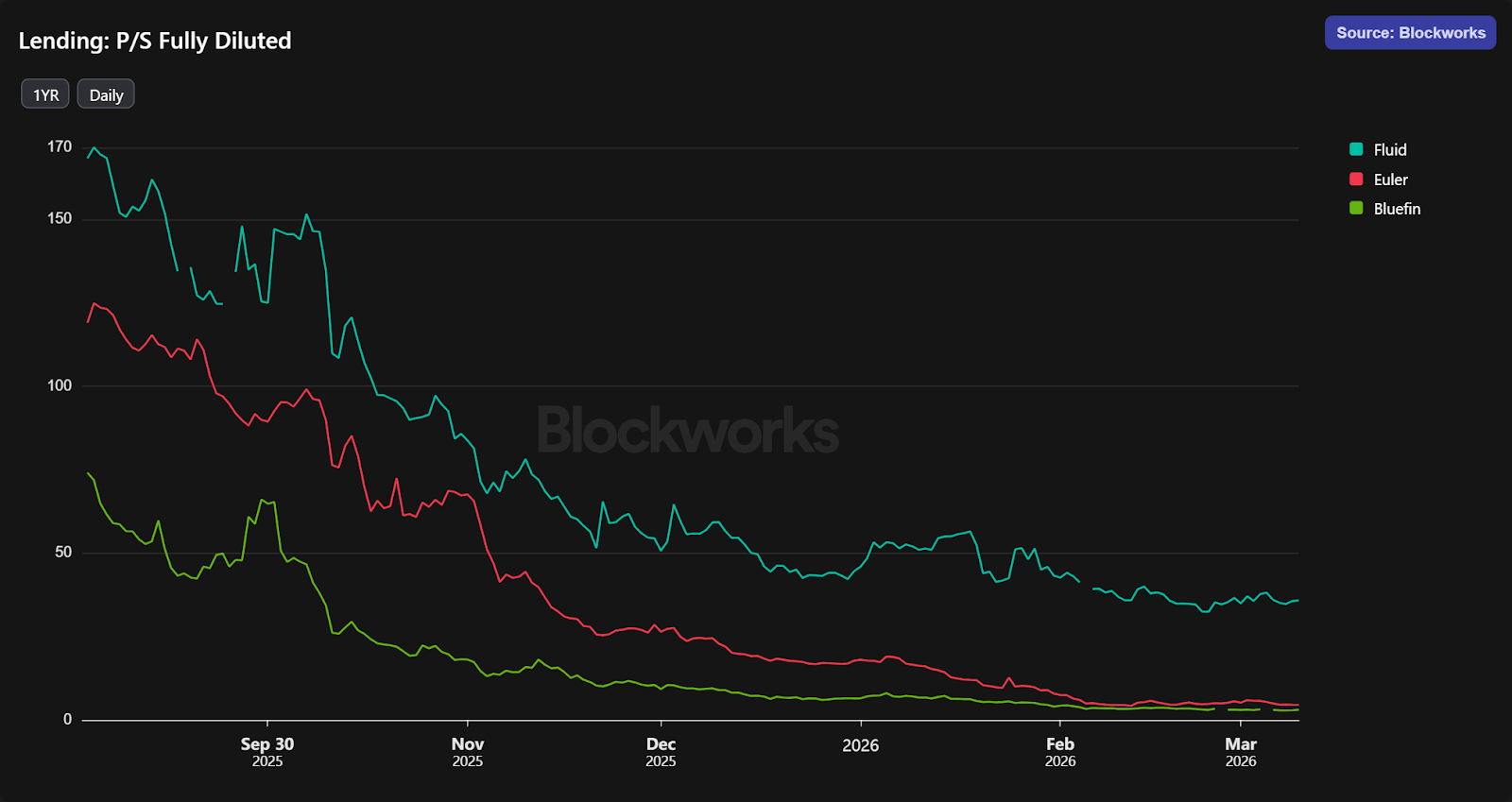
This divergence between price performance and underlying revenue suggests that recent strength in lending tokens may be more reflective of short-term positioning and sector rotation than a clear improvement in fundamentals. However, for market participants monitoring the space closely, any pickup in borrowing demand or protocol activity would likely translate quickly into higher revenues and improved token fundamentals, positioning attentive investors to benefit from an early recovery in lending activity.
— Marc
Reinsurance comes to DeFi
Reinsurance, in which companies insure the insurers, has quietly been one of the best risk-adjusted yield sources in traditional finance. Returns have been consistent so far and show almost no correlation to equities or credit markets.
The main catch has always been access: High minimums, broker relationships, and opaque fund structures kept most allocators locked out.
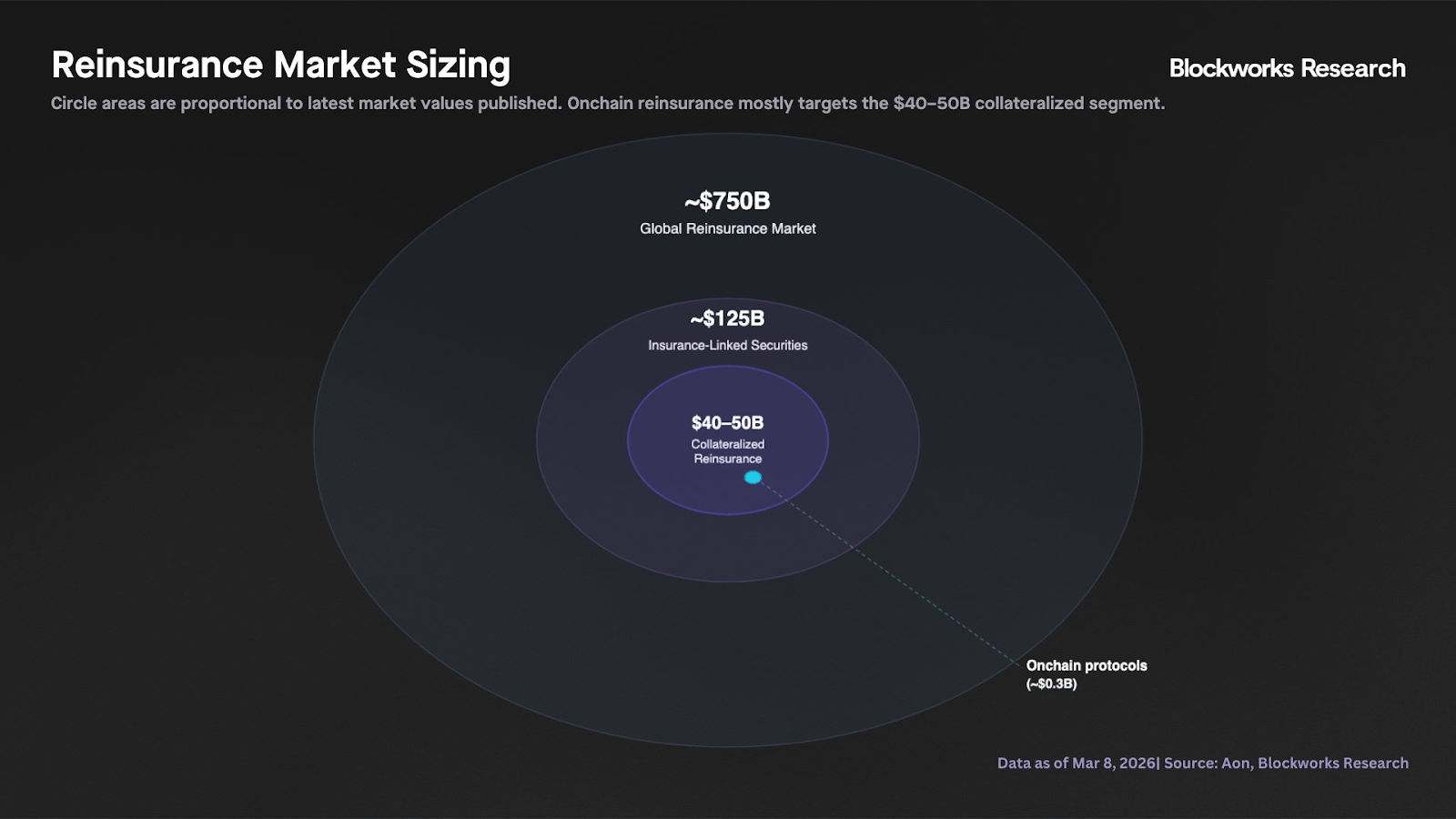
Two protocols, OnRe and Re Protocol, are now bringing reinsurance yield to DeFi, collectively managing around $300M in capital that backs real reinsurance contracts.
The mechanics are straightforward: Users deposit stablecoins, protocols deploy that capital through licensed brokers into actual reinsurance deals, and yield flows back from underwriting profit and collateral income.
This matters because most yield-bearing collateral in DeFi is tied to crypto market conditions. Yields compress or disappear exactly when stability matters most. Reinsurance returns, by contrast, are driven by natural-catastrophe frequency, mortality events, and other insurable risks.
OnRe (~$128M AUM) has built its token ONyc with NAV that accrues daily from underwriting profit and collateral yield on reserves. The current APY sits around 10.25%, below their 12% blended target, mainly because AUM growth has outpaced deal deployment. Roughly two-thirds of capital is still undeployed, though the April 1 renewal cycle should help close that gap.
What stands out is ONyc’s secondary market behavior: Its spread to NAV shows near-zero correlation with SOL volatility, and the peg is held through major crypto stress events. ONyc already has over $40M in collateral deposits on Kamino with utilization above 90%.
Re Protocol (~$200M AUM) takes a tranched approach. The reUSD token targets 6−8% APY with instant redemptions and minimal risk, while reUSDe targets 13−23% APY but absorbs losses first. Re focuses on low-volatility US-program business with combined ratios of 91−93%, and ceded premium has scaled from $12M in 2022 to $157M signed for 2026.
Both protocols also integrate with yield tokenization platforms, offering some of the highest fixed rates in the PT universe: around 11.3% for PT-ONyc and 13% for PT-reUSDe. You can find our analysis on OnRe points in our newsletter from last Friday.
You can read our very own Sam Schubert's full report.

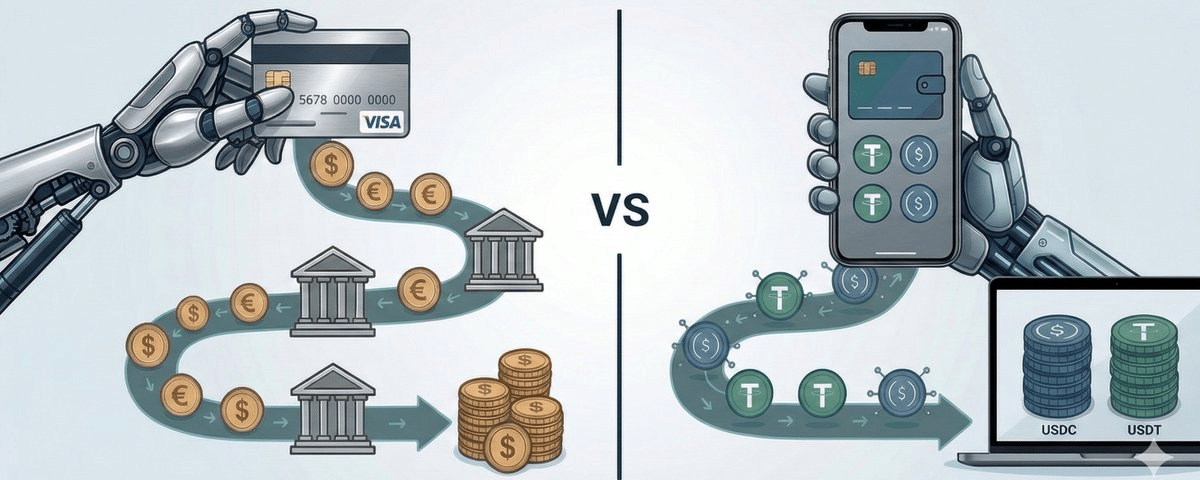
For AI agents, the right payment rail depends on the type of transaction. Card networks are best for agents acting as proxies for humans — booking travel, paying for SaaS, or buying goods — because they offer global acceptance, buyer protections, and established infrastructure.
But card fees and settlement structures make micropayments, high-frequency API calls, and other machine-native transactions uneconomical. Stablecoins solve this by enabling near-instant, low-cost payments with programmable wallets and emerging protocols for agent identity and micropayments. The likely future is hybrid: cards for human-style commerce, stablecoins for machine-native transactions.

NVIDIA argues that AI should be viewed not as a single technology but as a full industrial stack spanning five layers: energy, chips, infrastructure, models, and applications.
Because AI generates intelligence in real time rather than executing pre-written software, it requires massive computing infrastructure, effectively AI factories that convert energy into intelligence at scale. As models become more capable and economically useful, demand is accelerating across the entire stack, driving what NVIDIA describes as one of the largest infrastructure buildouts in history, with trillions of dollars still to be deployed.

DAS NYC's lineup is bringing the biggest names in finance to the stage.
Don't miss the institutional gathering of the year — this March 24−26.