- 0xResearch
- Posts
- Distribution layer



Macro is back in control. Gold rebounded after five straight-down weeks, but higher oil, firmer yields, and renewed higher-for-longer pricing continue to weigh on most risk assets. Meanwhile, crypto strength remains concentrated in a narrow set of AI and meme names.
Against that backdrop, BASED’s launch stands out — it’s the first builder-code token to secure broad day-one CEX distribution, and it’s already the highest-FDV app-layer token on Hyperliquid.

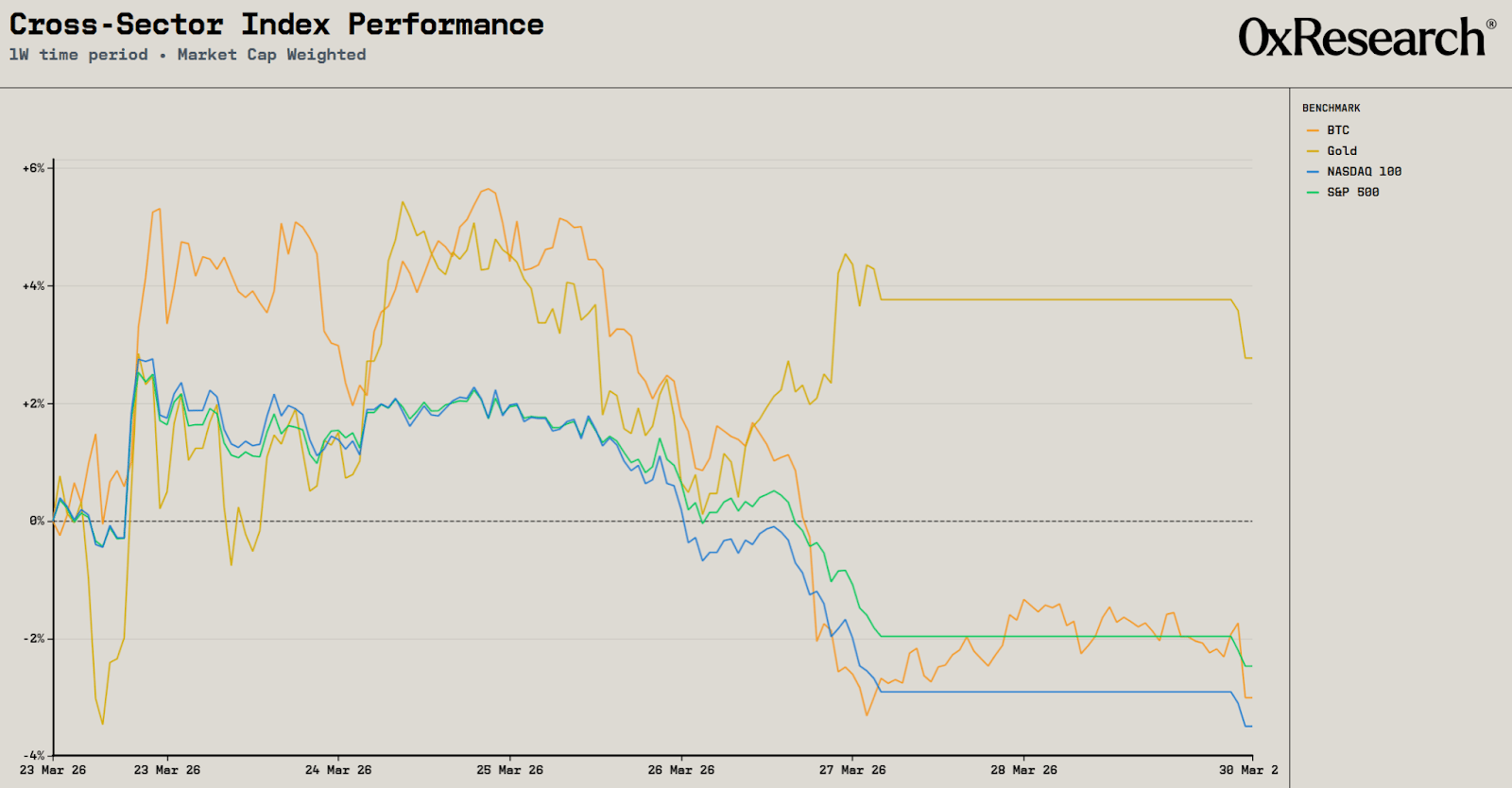
Gold ended the week in the green, posting gains of 2.8% after five consecutive weeks of drawdowns, while the rest of the market continues to struggle. The S&P 500, BTC and Nasdaq all closed lower, down −2.5%, −3.0% and −3.5%, respectively.
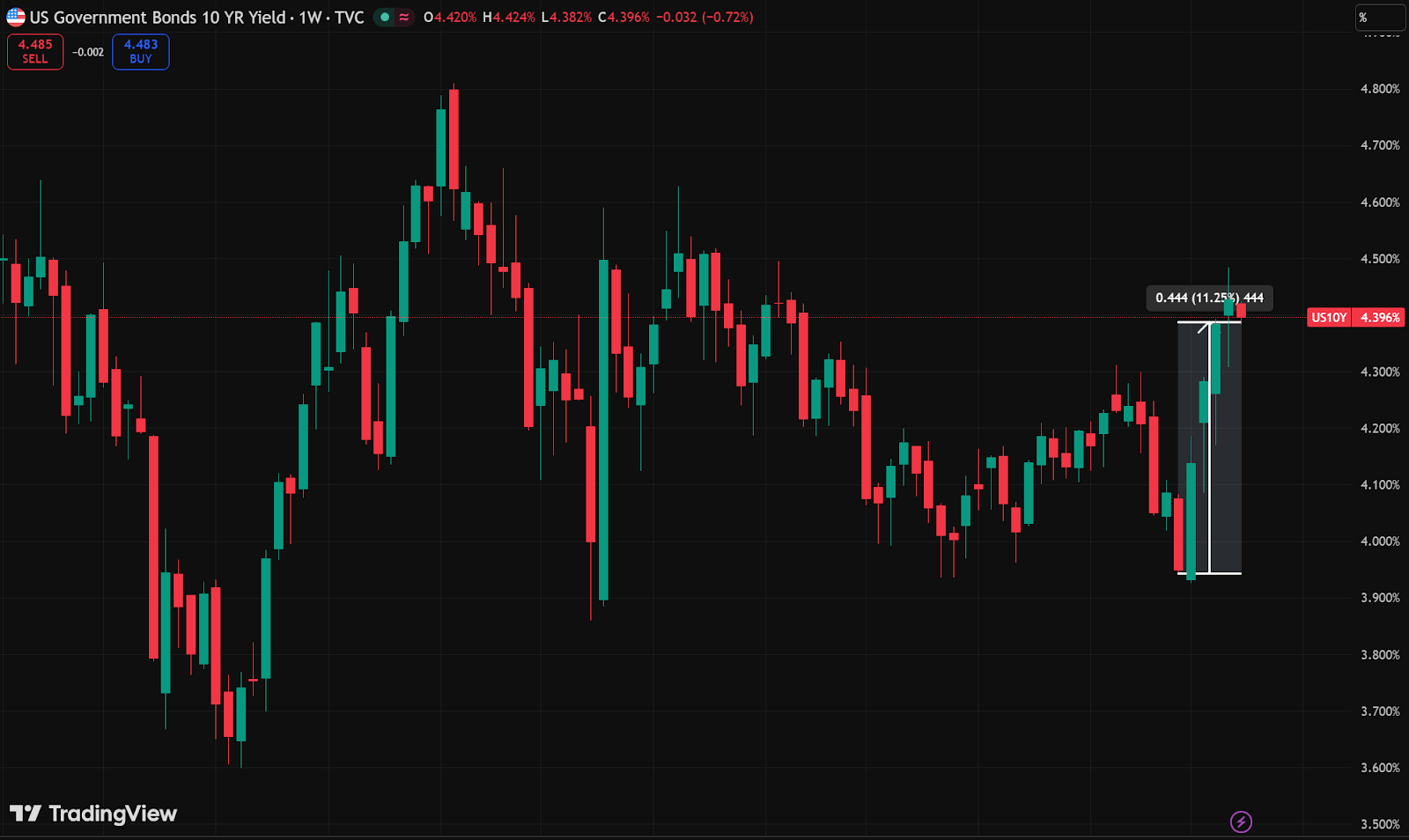
US-Iran tensions remain front and center and are expected to persist for several more weeks. Secretary of State Marco Rubio indicated to G7 ministers that hostilities could last another two to four weeks, keeping oil prices elevated above $100 and pushing treasury yields higher. The 10Y yield is now around 4.39%, up roughly 11% since the conflict began and back to levels last seen in May 2025.
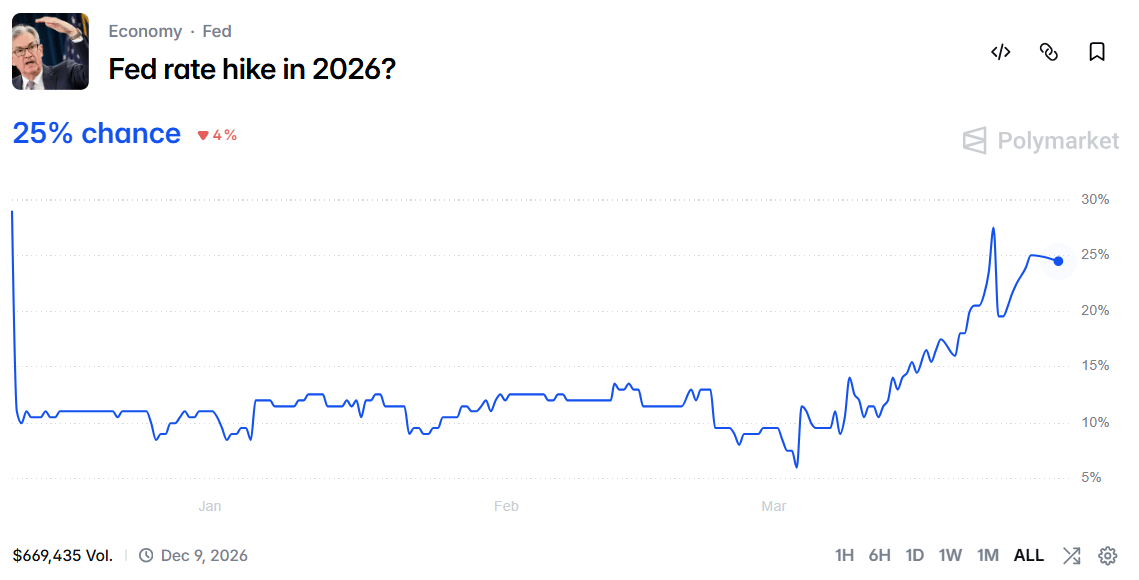
This shift in macro expectations is also showing up in rate markets, with a 24% probability now being assigned to a Fed rate hike in 2026. Higher-for-longer expectations continue to weigh on risk assets across the board.
Within crypto, the same sectors continue to lead. Memes and AI posted gains of 23.3% and 20% on the week. Meme strength once again came from a narrow set of names, with Memecore up 31% on the week and 52% over the last month. Other tokens like SIREN have also seen sharp moves, but often perp volumes far exceed spot, suggesting that a large portion of the price action may not be organic.
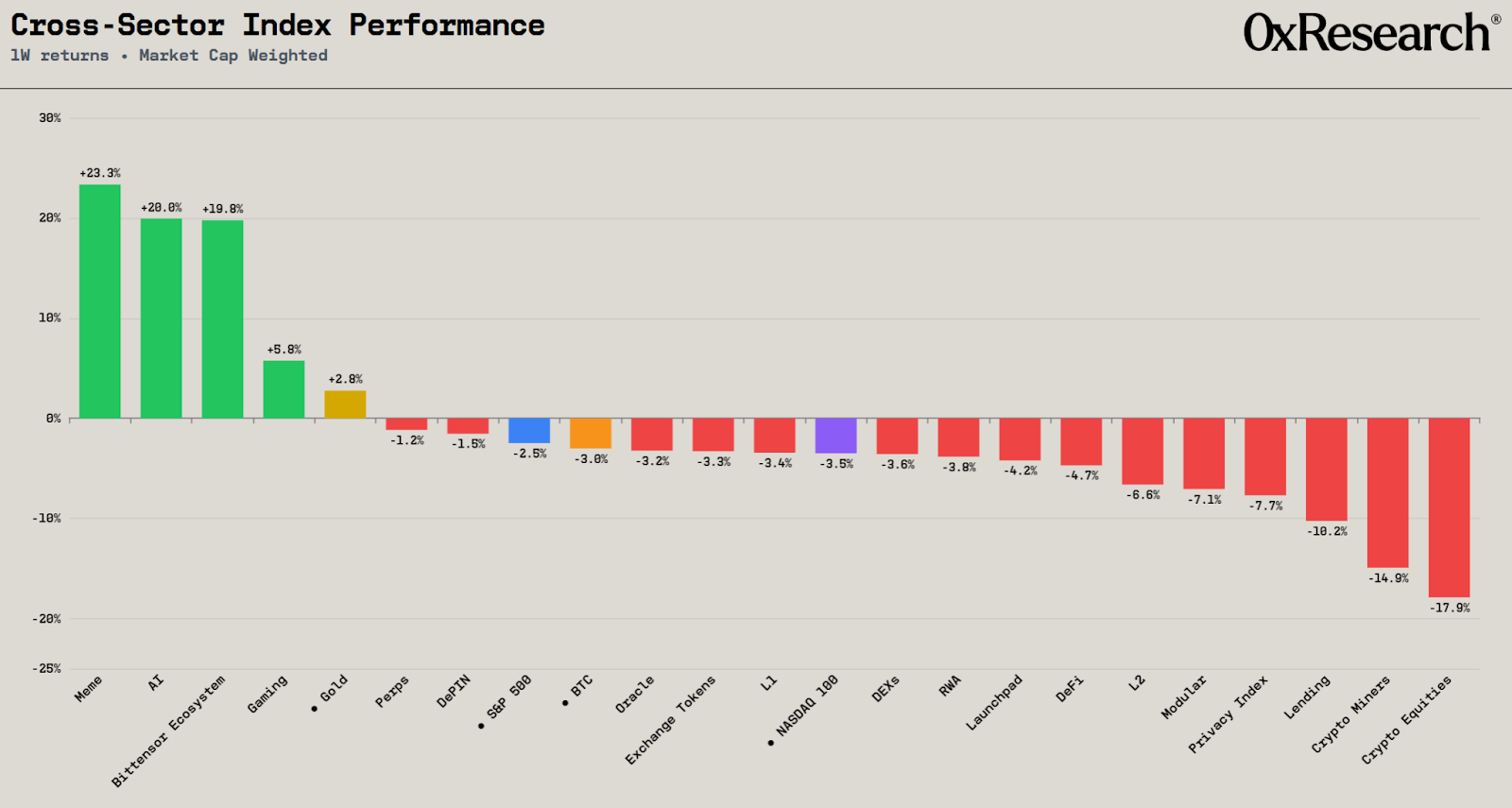
In AI, TAO remains the clear leader, up 20.3% on the week. The broader Bittensor ecosystem has followed closely, up 19.8%. The drivers behind this move were covered in a recent edition, and momentum continues to build. Outside of these names, FET was also a strong performer, rising 11.5% on the week.
Looking ahead, it’s a data-heavy week, with job numbers back in focus. The March jobs report will be released on Friday, with expectations for 56,000 job additions and unemployment holding at 4.4%.
Alongside that, keep an eye on remarks from Fed Chair Powell today for clearer signals on the policy path ahead.
— Kunal
Based
BASED went live today across Hyperliquid, Coinbase, Binance Alpha, Bybit and OKX simultaneously. It marks the first time a token originating on Hyperliquid’s builder-code infrastructure has achieved day-one distribution on a tier-1 CEX. Pre-market consensus centered on a $75–100M FDV, and current prices look like that was accurate. At $116M, BASED has become the highest FDV app-layer token on Hyperliquid.
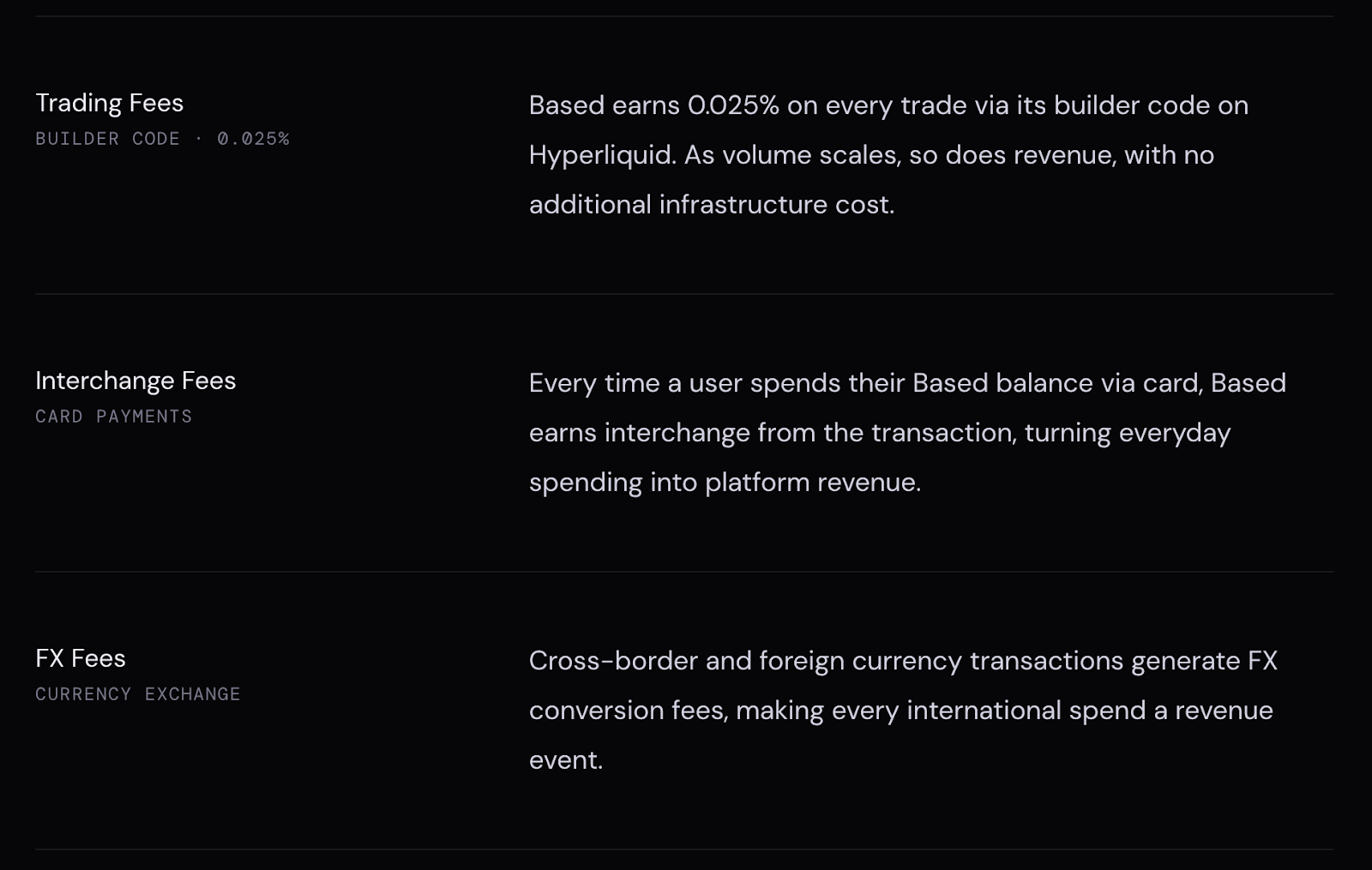
Based is the highest-volume builder-code exchange on Hyperliquid, with $41B in cumulative volume, $15M in revenue, and roughly 2% of total Hyperliquid flow on a trailing basis (peaks above 10%). It sits second behind Phantom on users and all-time builder-code revenue. The product surface is broader than most builder-code frontends: perps, spot, Polymarket integration, fiat on/off ramps, and a Visa spend card. That makes it more of a consumer-distribution layer for Hyperliquid than a pure trading interface.
September 2025 was the breakout month at $18.5B in perp volume, nearly half the platform’s lifetime total. October held at $8.5B, but from there daily flow normalized sharply. The current run rate sits around $30–35M/day through March, down from peaks above $1.8B/day at the September highs. That’s still meaningful flow for a builder-code frontend, but the $41B headline number is heavily front-loaded.

Pantera led an $11.5M Series A in February, with Coinbase Ventures and Wintermute also on the cap table: 100K users, 30K MAUs, and revenue diversified between builder codes and streams.
Edison Lim, Based’s founder, posted a thread on March 29 addressing the concurrent CEX listing. His argument is pragmatic: CEX listings expand distribution and liquidity for the token, Binance alone opens access to 200M+ users, and the strategy establishes a precedent that tokens can originate on Hyperliquid and still reach tier-1 venues. Most supply stays on Hyperliquid, with portions bridged to Ethereum and BSC via LayerZero and Stargate to enable CEX deposits. Some pushback from the Hyperliquid community followed, given the ecosystem’s anti-CEX positioning. But the more relevant framing is whether this is a net positive for Hyperliquid regardless of the optics. If BASED performs well across venues, it validates Hyperliquid as origination and settlement infrastructure while still allowing tokens to be distributed to a wider range of users.
On tokenomics: 1B supply, 36% to community (24% unlocking at TGE with no lock-up), 20.36% to investors, and 20% to contributors. The team introduced a pre-staking mechanism to absorb opening sell pressure, offering boosted rewards and up to 100% trading fee discounts for early stakers. Managing a 240M token unlock across five exchanges simultaneously is the near-term execution risk.
Still, builder codes remain one of the most durable revenue models on Hyperliquid, and several HyperEVM projects have already pivoted toward HIP-3 and builder-code integration. Based sits at the center of that trend with the highest cumulative volume of any builder-code frontend — and now the widest token distribution of any Hyperliquid-native project. For those looking for exposure to the builder-code economy beyond HYPE itself, BASED is the most direct bet available.
— Shaunda


Gnosis proposes the Ethereum Economic Zone as a new framework to fix fragmentation across L2s, arguing that while rollups solved scaling, they broke composability by creating isolated liquidity and infrastructure silos. EEZ introduces synchronous composability between L1 and L2s, allowing smart contracts to interact across chains atomically within a single transaction while remaining anchored to Ethereum’s security and settlement.
The goal is to restore Ethereum as one unified economic system where protocols deploy once, liquidity is shared, and users no longer rely on bridges. Backed by Gnosis, Zisk and the Ethereum Foundation, the thesis is that the next phase of scaling is not more L2s but tighter integration, which can turn Ethereum back into a single composable network rather than a fragmented set of chains.

Santiago argues that Western Union is mispriced as a dying business when it’s actually a high-cash-flow distribution network with significant optionality from adopting stablecoins. The market is valuing WU at a low multiple because of declining growth and disruption fears from fintech and crypto, but this gives no credit to WU’s global reach, brand and consumer trust.
The key shift is that WU’s management now embraces stablecoins, and has launched its own, which could compress costs and improve margins without needing major user-behavior change. The thesis is that incumbents with distribution often capture more value from new technology than startups, and at current valuations the market is pricing zero probability of that upside, creating asymmetric return potential if execution improves.

Shaunda Devens claims that Hyperliquid’s 24/7 onchain perpetuals solve the systemic risks caused by traditional market closures, providing the only continuous venue for global price discovery. Backed by HIP-3 data — where real-world assets now drive 40% of total platform volume — he proves that Hyperliquid’s silver and crude-oil markets maintained deep liquidity and accuracy during extreme volatility and unprecedented weekend supply shocks.
Ultimately, Hyperliquid has transitioned into a primary financial layer that predicts traditional market reopens with a 74.8% hit rate.

Introducing Blockworks Investor Relations, an IR platform built for onchain businesses.
The latest Blockworks offering brings together analytics, a branded investor relations site, and integrated advisory support into a single platform. The result is a more efficient way to share your story, build trust with investors, and engage a global audience from day one.
If you’re building in crypto and want to upgrade your investor relations function, we’d love to work with you. Book a meeting with the Blockworks team to get started.
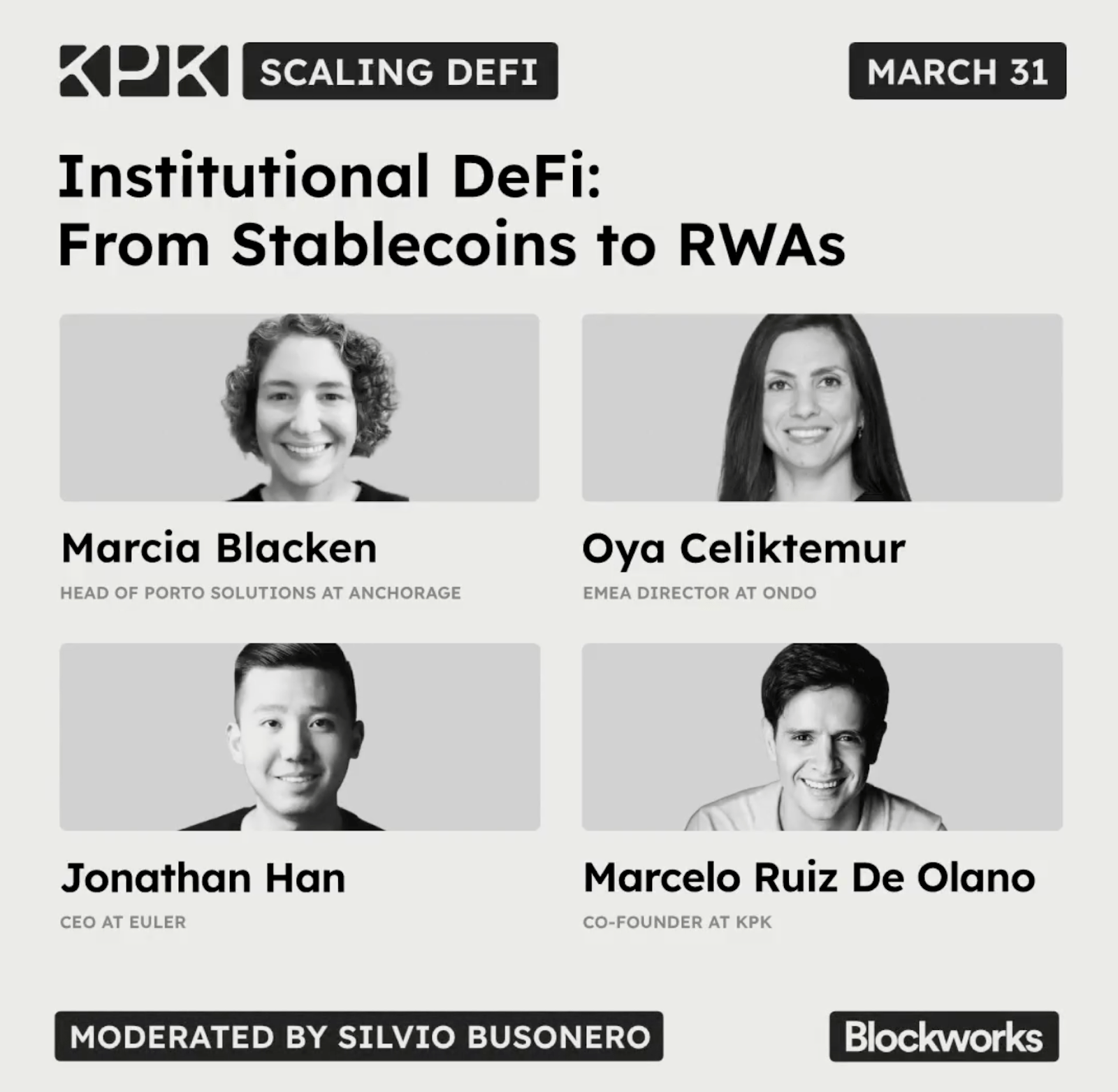
Tomorrow! Join us for a live 0xResearch episode with the industry’s best and brightest from Anchorage, Ondo, Euler and KPK on March 31 — 4 p.m. CEST/10 a.m. EST.
Our panelists will be diving into institutional traction, demand sinks, and remaining points of friction.